
As the sun sets and I sift through the fridge, the unmistakable scent of leftover rotisserie chicken calls to me. It’s a culinary canvas waiting for a burst of flavor. That’s when inspiration strikes—transforming that tender chicken into a Korean BBQ delight. Picture this: the caramelized sauce enveloping each piece, creating a crispy exterior paired with savory umami goodness. In just 20 minutes, this easy dish not only impresses the taste buds but is also a low-calorie, high-protein hero of the weeknight meal. Whether topped on fluffy half-calorie rice or nestled in a vibrant protein bowl alongside cucumber kimchi and pickled carrots, this Korean BBQ chicken is a guilt-free indulgence you won’t want to miss. Let’s dive into this transformation and rescue those leftovers from monotony!

Why Love This Korean BBQ Chicken?
Korean BBQ Chicken with Leftover Rotisserie Chicken transforms simple leftovers into a culinary masterpiece.
- Quick Meal: In just 20 minutes, you can have a flavorful dish ready to serve.
- High-Protein Bliss: Each serving boasts a whopping 29 grams of protein while keeping calories low.
- Versatile Flavor: Mix and match toppings like cucumber kimchi and pickled carrots to suit your palate.
- Texture Satisfaction: Experience the crunch of crispy edges enveloped in a sweet and savory sauce that tantalizes your taste buds.
- Easy Cleanup: Using store-bought ingredients makes this recipe a breeze, so you can spend less time cooking and more time enjoying!
Don’t forget to explore other ways to make the most of your rotisserie chicken in your meals!
Korean BBQ Chicken Ingredients
• Let’s gather everything you need for this delicious transformation!
For the Chicken
- Rotisserie Chicken – Use pulled or chopped pieces for easier mixing; opt for skinless breast for lower calories.
- Korean BBQ Sauce – Adds sweet and savory flavor; try Kevin’s for fewer calories but feel free to use your favorite brand.
For the Base
- Half Calorie Rice – A low-calorie alternative to traditional rice, perfect for holding all that delicious chicken.
For the Toppings
- Cucumber Kimchi – Provides a crunchy, tangy bite; choose store-bought for convenience or make your own.
- Creamy Kimchi Sauce – Add richness to your dish; simply blend kimchi with light mayo and gochujang for a quick dip.
- Pickled Carrots – Adds a touch of sweetness and acidity; quick pickling is an easy way to enhance flavors.
- Toasted Sesame Seeds – Optional garnish that brings a delightful nutty flavor and pleasing texture.
- Scallions – Fresh and vibrant, these provide a burst of flavor; use them as a colorful garnish on top.
This Korean BBQ chicken with leftover rotisserie chicken is your ultimate guide to a quick, flavorful meal!
How to Make Korean BBQ Chicken with Leftover Rotisserie Chicken
-
Preheat your oven’s broiler to high and position a rack in the center. This will ensure even cooking and help achieve that perfect crispy texture on the chicken.
-
Toss the pulled rotisserie chicken in a bowl with Korean BBQ sauce until every piece is evenly coated. The sauce not only adds flavor but also helps with caramelization during the broiling process.
-
Spread the chicken mixture evenly on a quarter sheet pan or in a large oven-safe skillet. Ensuring an even layer will help the chicken cook uniformly and get that delightful char.
-
Broil for 8-12 minutes until the sauce caramelizes and the chicken edges become crispy. Keep a close eye on it to prevent burning, as broilers can vary in intensity.
-
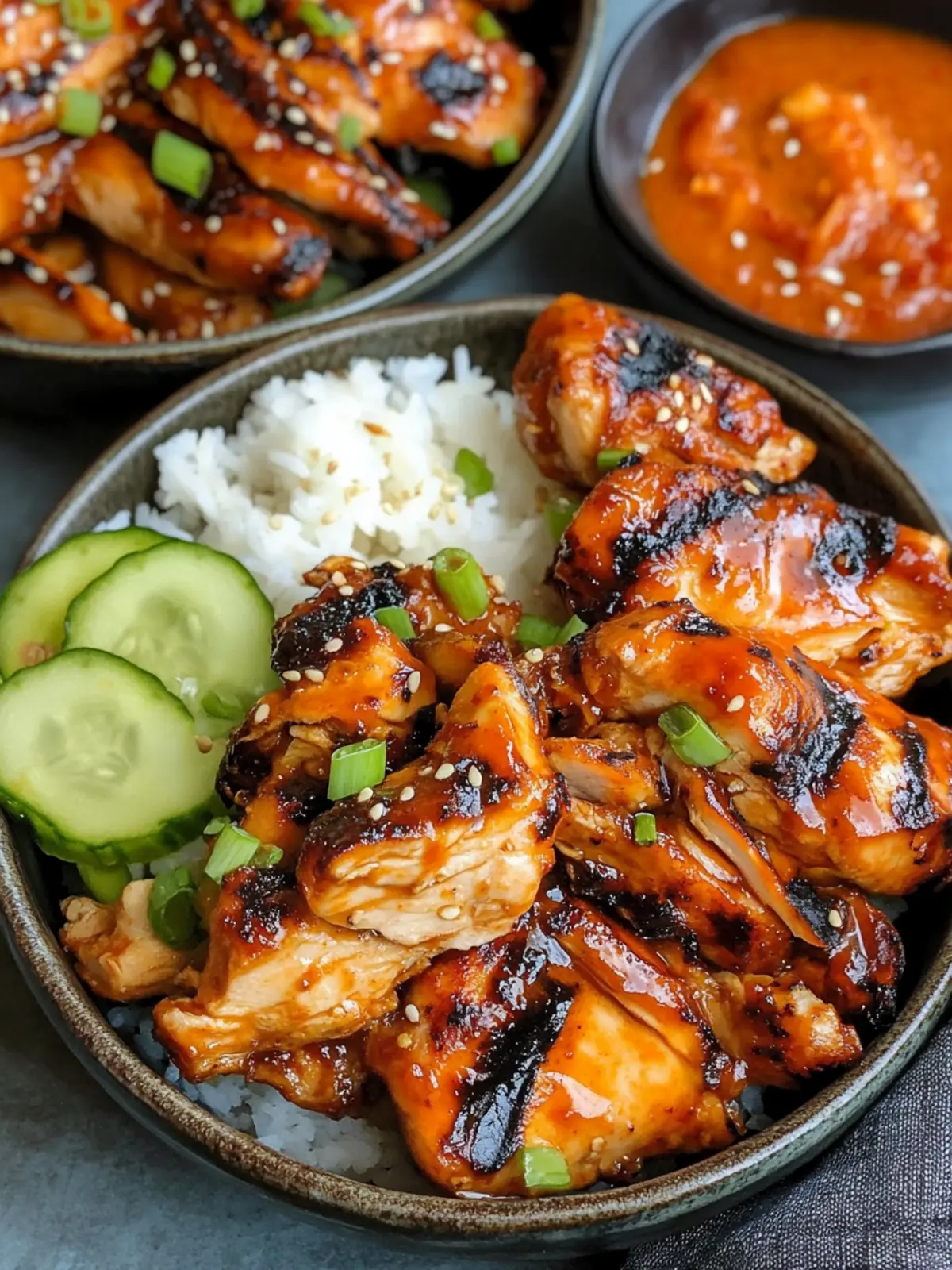
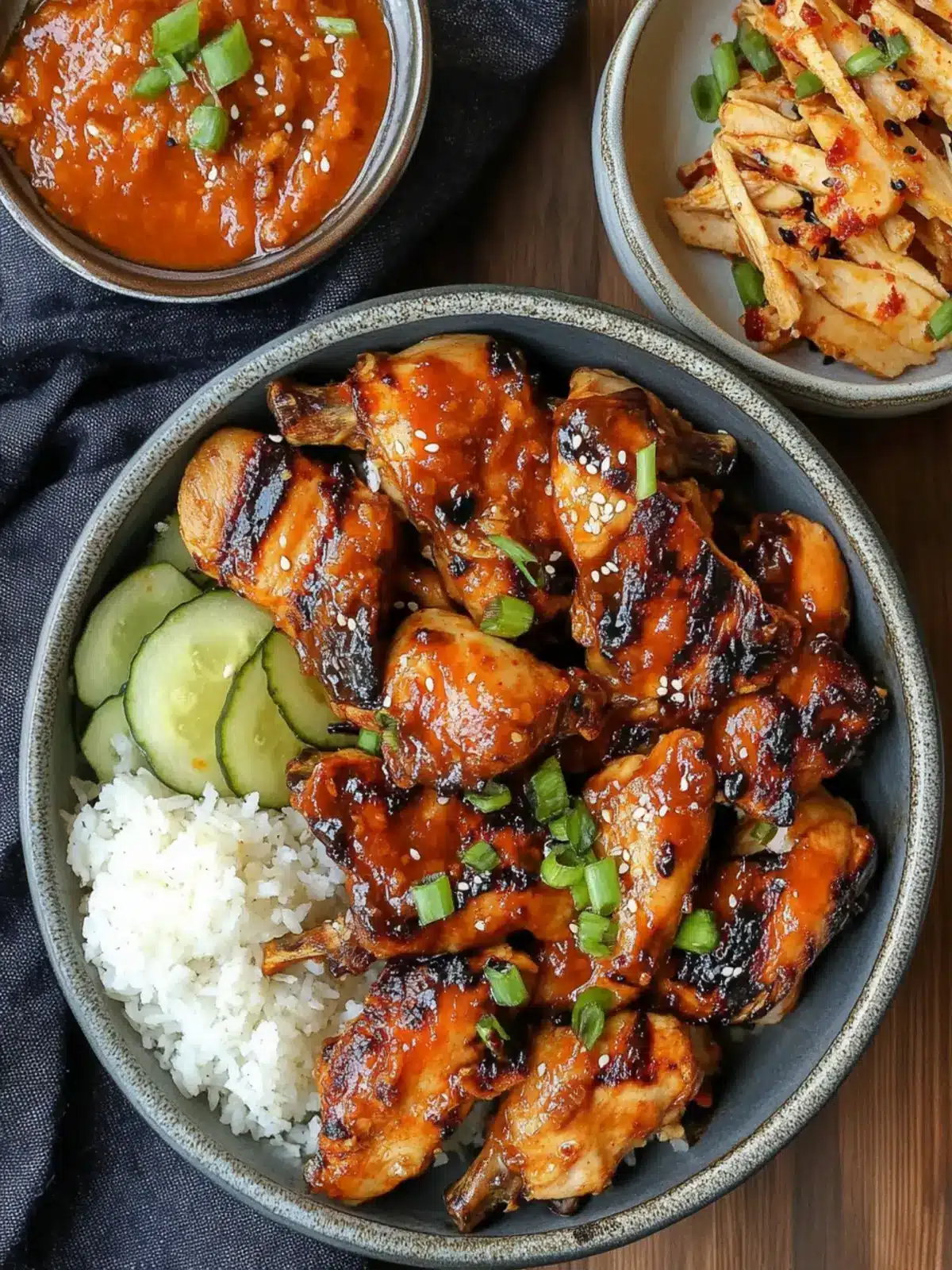
Serve immediately over half-calorie rice, accompanied by your choice of banchan such as cucumber kimchi, creamy kimchi sauce, and pickled carrots for a beautiful, satisfying meal.
Optional: Garnish with toasted sesame seeds and chopped scallions for an added touch of flavor and color.
Exact quantities are listed in the recipe card below.
Expert Tips for Korean BBQ Chicken
-
Monitor Closely: The broiling process can burn quickly; keep a watchful eye, especially during the final moments. This ensures your Korean BBQ chicken comes out perfectly crispy.
-
Sauce Selection: Use a lower sugar Korean BBQ sauce to prevent burning and enhance the flavor without compromising calories. This keeps your dish healthy and tasty!
-
Even Coating: Make sure the pulled rotisserie chicken is evenly coated with the sauce. This will ensure that every bite delivers the delicious umami flavor you expect from Korean BBQ chicken.
-
Vegetable Preparation: When adding toppings like cucumber kimchi or pickled carrots, thinly slice the vegetables for even marination and crunch. It enhances the overall texture of the dish.
-
Quick Pickling Tip: To save time, quickly pickle your carrots by marinating them in vinegar and sugar while the chicken broils. This adds brightness and acidity to balance the dish.
By following these expert tips, your Korean BBQ chicken with leftover rotisserie chicken will shine as a quick, nourishing meal!
What to Serve with Korean BBQ Rotisserie Chicken?
As you transform your leftovers into a delightfully savory meal, consider these mouth-watering accompaniments to elevate your dining experience.
-
Crispy Lettuce Wraps: Crisp lettuce leaves become the perfect vessel for your BBQ chicken, adding a refreshing crunch with every bite. They’re a fun, hands-on way to enjoy your meal while keeping it light.
-
Fluffy Half Calorie Rice: A soft, low-calorie rice base soaks up the delicious sauce from the chicken, creating a harmonious balance of flavors and textures on your plate. It supports the savory elements without adding too many calories.
-
Tangy Cucumber Kimchi: The bright, bold flavors of cucumber kimchi not only add zest but also contrast beautifully with the rich BBQ sauce. This dish sends your taste buds on a delightful adventure that awakens the senses.
-
Sweet Pickled Carrots: Offering a zingy sweetness, pickled carrots serve as a perfect counterbalance to the savory chicken, enriching your meal with vibrant color and flavor.
-
Creamy Kimchi Sauce: Smooth and rich, this sauce brings an indulgent layer to your dish, bursting with umami goodness. Dip your chicken or drizzle it on top for that extra kick of flavor.
-
Toasted Sesame Seeds: A sprinkle of these seeds provides a nutty crunch that elevates the overall texture of your meal. Not only do they add flavor, but they also enhance presentation, making each dish more enticing.
-
Chilled Soju or Korean Beer: To wash it all down, enjoy a light, refreshing drink like chilled soju or a crisp Korean beer. The lightness of these beverages complements the flavors of your BBQ chicken beautifully.
These delightful pairings will ensure your Korean BBQ chicken with leftover rotisserie chicken becomes not just a meal, but a memorable dining experience!
Korean BBQ Chicken Variations
Get creative and discover delightful twists on this homemade classic!
-
Spicy Kick: Add a tablespoon of gochujang to the BBQ sauce for an exciting, spicy flavor that elevates your dish. Feel the heat and let the flavor dance across your palate.
-
Vegetarian Delight: Swap rotisserie chicken for sautéed mushrooms or grilled tempeh for a hearty vegetarian option that’s equally satisfying. Embrace the umami in every bite with these delicious alternatives!
-
Sweet Option: Replace Korean BBQ sauce with teriyaki sauce for a sweeter taste profile. This simple switch will appeal to those who enjoy a milder, yet equally delightful flavor.
-
Crunchy Vegetables: Toss in bite-sized bell peppers, snap peas, or carrots right before broiling for added color and nourishment. Each crunchy morsel provides texture and a burst of freshness.
-
Rice Substitution: Instead of half-calorie rice, try using cauliflower rice for a low-carb alternative. Enjoy the light, fluffy texture that complements the flavors of the chicken beautifully.
-
Nutty Flavor: Sprinkle with toasted peanuts or sliced almonds for an added crunch and nutty taste that enhances the overall dish. The nutty notes will awaken your senses!
-
Herbed Chicken: Season the chicken with fresh herbs like cilantro or parsley before broiling for a refreshing and aromatic touch. The herbs will harmonize beautifully with the savory sauce.
-
Garlic Boost: Mince some garlic and sauté it with chicken before broiling for an aromatic twist. Garlic’s robust flavor will enhance the umami goodness of your Korean BBQ chicken.
Make Ahead Options
These Korean BBQ chicken with leftover rotisserie chicken are perfect for meal prep! You can easily prepare the chicken mixture—tossing the pulled rotisserie chicken with Korean BBQ sauce—up to 24 hours in advance. Simply store it in an airtight container in the refrigerator to maintain freshness. Additionally, you can also pickle the carrots and make the creamy kimchi sauce to have everything ready for assembly. When it’s time to serve, just spread the chicken mixture on a pan and broil for 8-12 minutes until crispy and caramelized. By prepping ahead, you’ll enjoy a quick and delicious meal without sacrificing flavor or quality!
How to Store and Freeze Korean BBQ Chicken
- Fridge: Store leftover Korean BBQ chicken in an airtight container for up to 3 days. This keeps the flavors intact and ensures the chicken stays tender when reheated.
- Freezer: If you need to store for longer, freeze the chicken in a freezer-safe container for up to 2 months. Make sure to remove as much air as possible to avoid freezer burn.
- Reheating: When you’re ready to enjoy, thaw in the fridge overnight and reheat in the oven or microwave until thoroughly warmed. Add a splash of Korean BBQ sauce if desired to refresh the flavor of your Korean BBQ chicken.
- Room Temperature: Avoid leaving the chicken out at room temperature for more than 2 hours to maintain safety and quality.
Korean BBQ Chicken with Leftover Rotisserie Chicken Recipe FAQs
What type of rotisserie chicken should I use?
Absolutely! For this Korean BBQ chicken, I recommend using pulled or chopped rotisserie chicken. You can opt for skinless breast for a lower-calorie meal or choose dark meat for a richer flavor profile. Just make sure the chicken is fully cooked before you start the recipe!
How should I store leftover Korean BBQ chicken?
For best results, store your leftover Korean BBQ chicken in an airtight container in the refrigerator. This will keep it fresh for up to 3 days. When ready to enjoy, reheat gently in the oven or microwave to maintain its tenderness.
Can I freeze Korean BBQ chicken?
Yes, you can freeze Korean BBQ chicken! Transfer it to a freezer-safe container, ensuring you remove as much air as possible to prevent freezer burn. It can be stored for up to 2 months. When ready to eat, simply thaw it in the fridge overnight and reheat until warmed through.
What should I do if my sauce burns while broiling?
The broiling process can be tricky since it cooks quickly! If your sauce starts to burn, keep a close eye and reduce the broiling time next time. If you notice blackened spots, you can scrape the burnt areas off before serving. It’s always good to have a lower sugar BBQ sauce on hand to minimize burning!
Is this recipe safe for pets?
While the ingredients in Korean BBQ chicken are safe for humans, it’s important to keep it away from pets. Onions and garlic in the sauce can be harmful to dogs and cats. Always double-check the ingredient list to ensure your furry friends stay safe!
Can I make this recipe dairy-free?
Yes, absolutely! To keep the dish dairy-free, simply replace any creamy toppings with coconut yogurt or a plant-based mayo in your creamy kimchi sauce. This way, you can still enjoy a delicious Korean BBQ chicken while adhering to dietary restrictions.
Transform Leftover Rotisserie Chicken into Korean BBQ Bliss
Ingredients
Equipment
Method
- Preheat your oven's broiler to high and position a rack in the center.
- Toss the pulled rotisserie chicken in a bowl with Korean BBQ sauce until evenly coated.
- Spread the chicken mixture evenly on a quarter sheet pan or in a large oven-safe skillet.
- Broil for 8-12 minutes until the sauce caramelizes and the chicken edges become crispy.
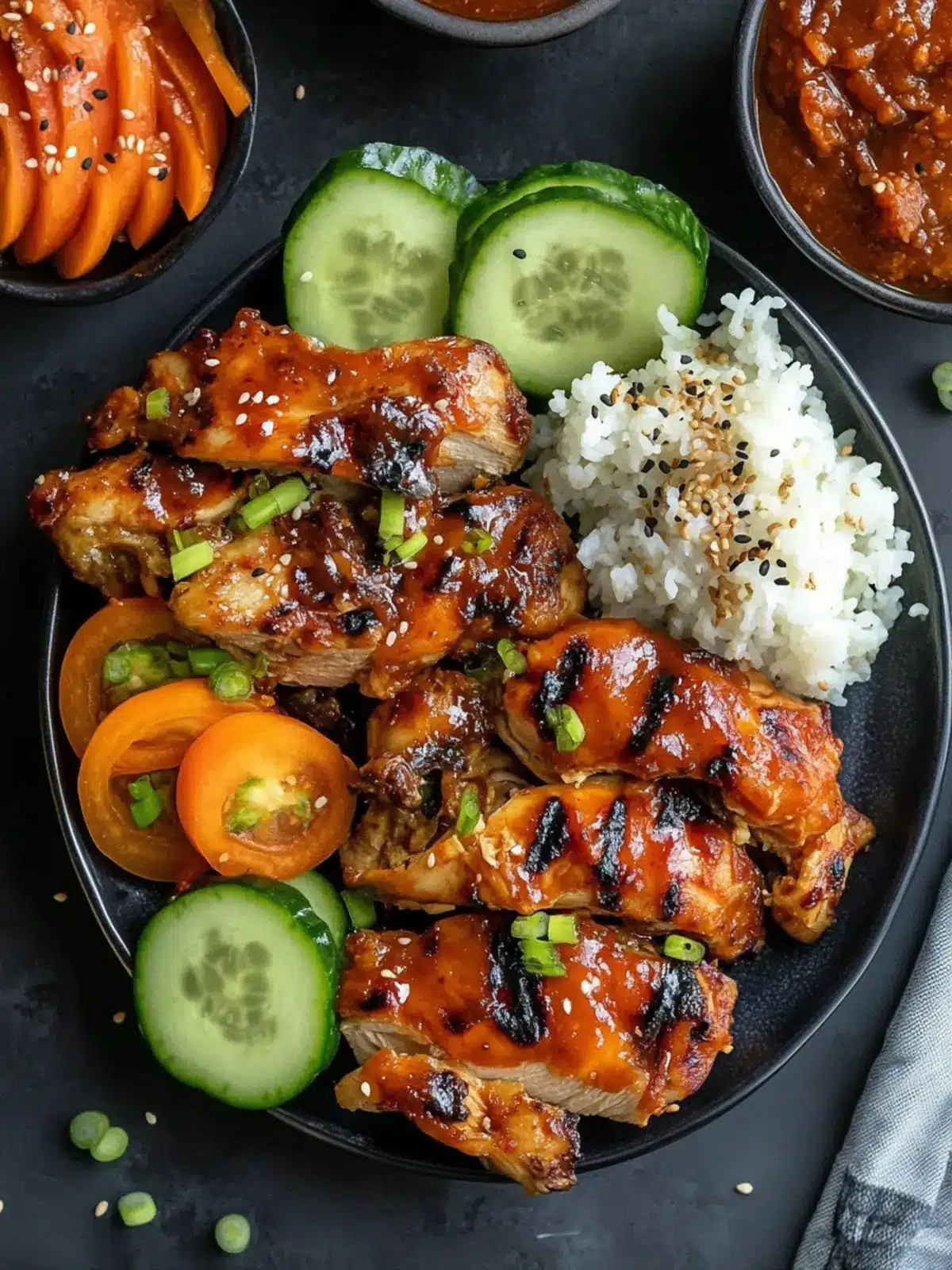
- Serve immediately over half-calorie rice, accompanied by cucumber kimchi, creamy kimchi sauce, and pickled carrots.
- Garnish with toasted sesame seeds and chopped scallions if desired.