
There’s something enchanting about the first whiff of pandan-infused sweetness wafting through your kitchen as you prepare Thai Coconut Custard, also known as Khanom Thuai. When I stumbled upon this traditional treat, I was quickly drawn to its delicate layers: a soft custard base perfectly complemented by a lightly salted coconut cream topping. This dessert isn’t just a feast for the taste buds – it’s a visual delight presented in charming little cups, evoking the beauty of Thailand’s vibrant street food culture.
After a long day of work, I often crave something that satisfies with minimal fuss, and this recipe offers just that. Steamed to creamy perfection, it strikes that blissful balance of sweet and salty that leaves everyone wanting more. Plus, its gluten-free and vegan-friendly nature makes it a versatile addition to any dessert table, whether you’re hosting a festive gathering or simply indulging in a personal treat. Get ready to impress your loved ones with this captivating Thai Coconut Custard – a simple yet exquisite escape into the world of homemade desserts!
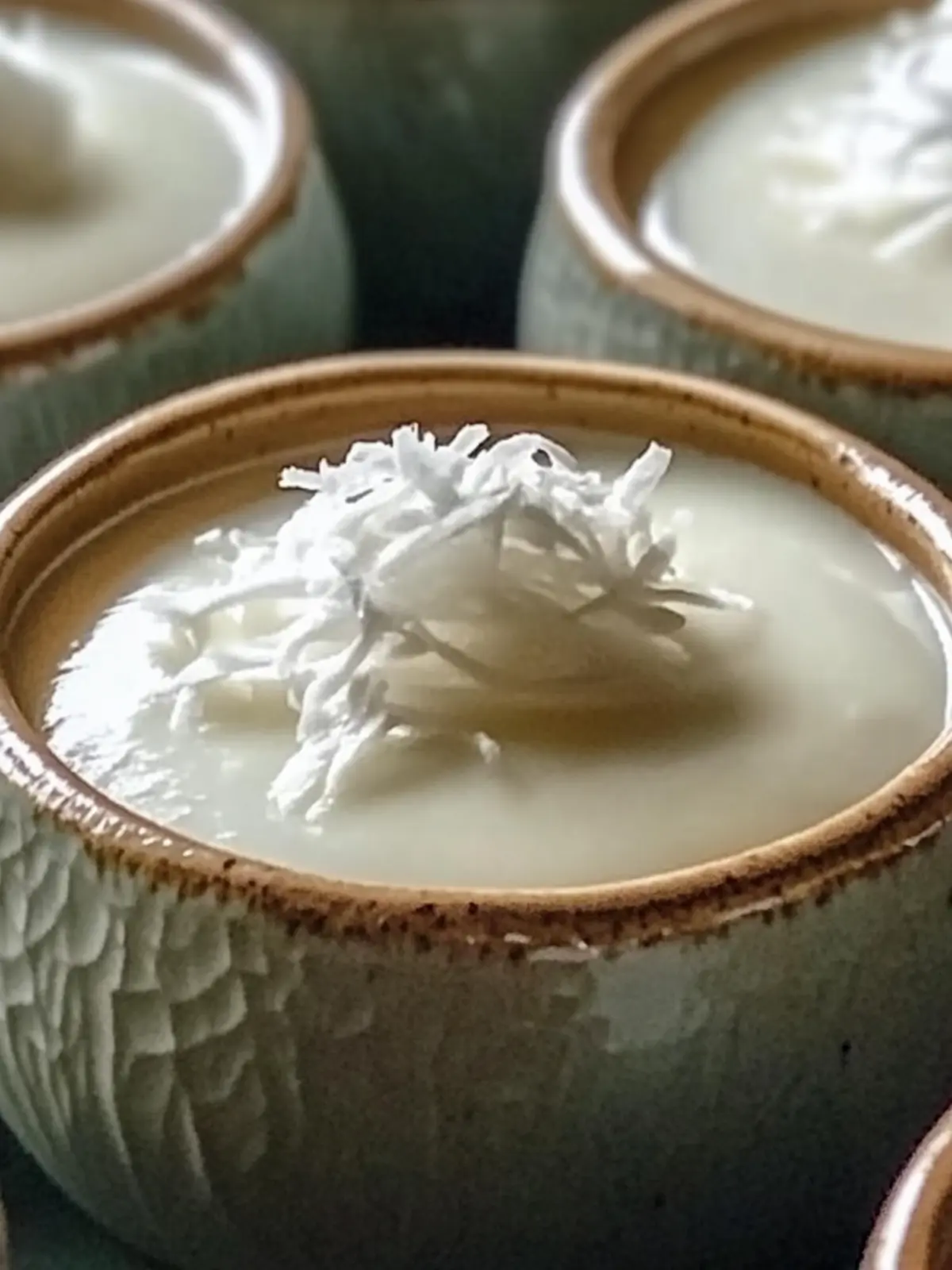
Why is Thai Coconut Custard so irresistible?
Deliciously Unique: The blend of sweet pandan and salty coconut cream creates a flavor profile that’s utterly delightful.
Easy to Make: With simple steps, this recipe is perfect for home cooks, regardless of experience.
Versatile Dessert: Enjoy it warm or chilled, making it perfect for any occasion—family dinners, gatherings, or just a cozy night in.
Gluten-Free & Vegan: This dessert accommodates various dietary needs, appealing to a broader audience.
Cultural Experience: Cooking this traditional Thai treat invites you on a culinary adventure, connecting you with Thailand’s rich flavors and heritage.
Thai Coconut Custard Ingredients
For the Bottom Layer
- Rice Flour – Provides structure and texture for the custard; can substitute with all-purpose flour for a slightly different texture.
- Tapioca Flour – Enhances chewiness and improves the texture; avoid replacing, as it’s crucial for consistency.
- Pandan Juice – Adds natural sweetness and a floral aroma; can replace with diluted pandan extract if fresh leaves are unavailable.
- Palm Sugar/Brown Sugar – Contributes sweetness and a caramel-like flavor; coconut sugar can also be used for similar depth.
- Salt – Enhances flavor and balances the sweet and salty elements; sea salt works great as an alternative.
For the Coconut Cream Topping
- Coconut Cream – Provides a rich, creamy texture for the topping; coconut milk can substitute for a lighter consistency.
- Additional Rice Flour – Stabilizes the coconut cream layer; not recommended to replace as it’s essential for thickness.
- Salt – Again enhances flavor, ensuring the signature sweet and salty balance is maintained.
How to Make Thai Coconut Custard
-
Prepare Cups: Lightly grease 12 small ceramic cups or mini muffin pans with a bit of oil to prevent sticking. This step ensures easy release after steaming, making your presentation flawless.
-
Mix Bottom Layer: In a bowl, whisk together the rice flour, tapioca flour, pandan juice, palm sugar, and salt until the mixture is smooth and well-combined. The vibrant green color should hint at the delicious flavors to come!
-
Steam Bottom Layer: Pour the mixture into the prepared cups, filling each halfway. Steam over medium heat for 5–6 minutes, or until just set—look for a light firmness but still a little jiggle in the center.
-
Combine Top Layer: While the bottom layer is steaming, whisk together the coconut cream, additional rice flour, and salt until smooth and creamy. This luscious mixture gives the final touch to your custard.
-
Add Top Layer: After the bottom layer has set, carefully pour the coconut cream mixture over it in the cups. Steam for an additional 5–7 minutes, until the top layer is fully set and looks glossy.
-
Cool and Serve: Once done, remove the cups from the steamer and let them cool slightly. You can serve them warm for a cozy treat or chilled for a refreshing dessert.
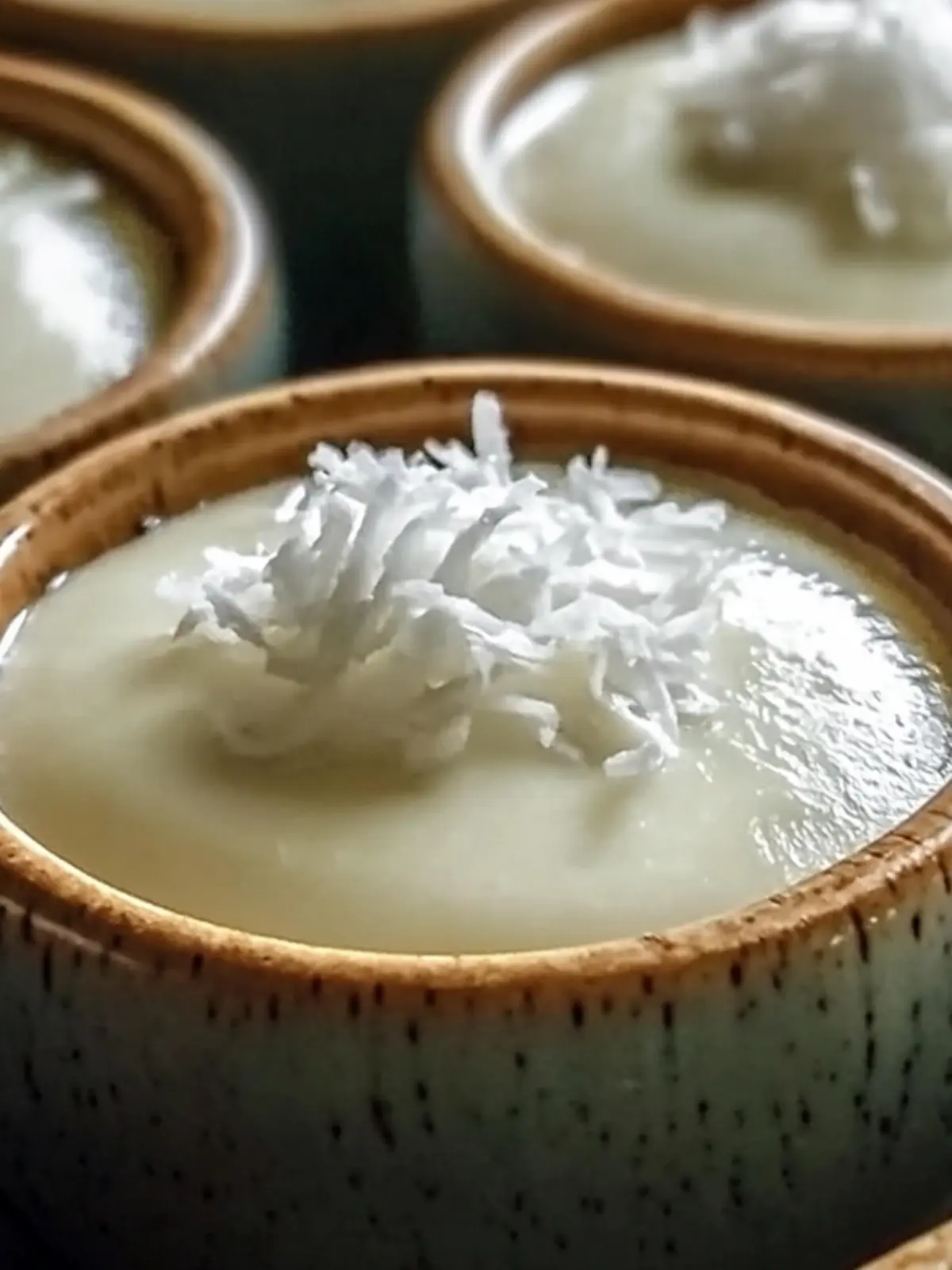
Optional: Garnish with fresh fruit or shredded coconut for a delightful presentation.
Exact quantities are listed in the recipe card below.
Make Ahead Options
These delightful Thai Coconut Custard treats are perfect for meal prep, allowing busy cooks to enjoy a delicious dessert without stress! You can prepare the bottom layer (rice flour mixture) up to 24 hours in advance; simply whip up the ingredients and refrigerate them in an airtight container. The top layer can also be mixed ahead of time and stored separately. When you’re ready to serve, pour the bottom layer into cups and steam for the suggested time, before adding the coconut cream topping and steaming again. This ensures each layer remains just as delicious and fresh, making entertaining or dessert time a breeze!
Thai Coconut Custard Variations
Feel free to explore these delightful twists that enhance your Thai Coconut Custard experience.
- Flavor Boost: Replace pandan juice with vanilla extract for a subtle, sweet aroma that complements the custard’s richness.
- Fruit Infusion: Add mango puree to the bottom layer for a burst of tropical flavor, bringing a sweet and fruity dimension.
- Chocolate Twist: Mix in cocoa powder with the bottom layer for a unique chocolatey spin, perfect for chocoholics.
- Nutty Delight: Incorporate toasted coconut flakes into the cream topping for added texture and a delightful crunch.
- Herbal Fusion: Swap pandan with matcha powder, providing a vibrant green color and earthy flavor that pairs wonderfully with coconut.
- Spicy Kick: Stir in a pinch of cayenne pepper into the coconut layer for surprising heat that contrasts beautifully with the sweetness.
- Zesty Surprise: Add some zest from a lime into the custard mix for a refreshing citrusy note that brightens each bite.
- Caramel Drizzle: Finish with a drizzle of salted caramel sauce over the top before serving for a decadent, rich experience that will impress everyone.
What to Serve with Thai Coconut Custard?
Elevate your dessert experience by pairing this delightful custard with these enchanting accompaniments.
-
Fresh Mango Slices: These sweet, juicy slices add a tropical twist and vibrant color, complementing the creamy custard perfectly. The refreshing flavor of ripe mango balances the richness of the dish, making each bite unforgettable.
-
Crispy Spring Rolls: A crispy starter or snack that provides a delightful crunch against the soft, silky custard. The savory flavors will prepare your palate for the sweet indulgence to follow.
-
Coconut Sticky Rice: This delightful side features a chewy texture and a hint of sweetness, creating harmony with the custard’s flavor profiles. Drizzle with extra coconut cream to enhance the experience!
-
Thai Iced Tea: This sweet, creamy beverage perfectly complements the dessert’s flavors and refreshes the palate. The spices in the tea echo the aromatic notes of pandan, creating a beautiful symphony of tastes.
-
Grilled Pineapple: Caramelized on the grill, pineapple adds warmth and a delightful sweetness that enhances the custard’s signature blend. Its charred notes bring a comforting finish to the meal.
-
Roasted Cashews: Offering a crunchy, nutty contrast to the soft custard, roasted cashews provide a complementary crunch and a richness that mirrors the dessert’s creamy topping.
-
Fruit Salad: A medley of tropical fruits like kiwi, papaya, and bananas provides refreshing acidity against the custard’s richness. The diverse textures and flavors make every bite exciting!
-
Jasmine Rice Pudding: This sweet, fragrant dessert echoes the custard’s soft texture while adding layers of aromatic flavor. The combination is nothing short of comforting and satisfying.
-
Matcha Latte: This creamy, lightly sweet drink enhances the custard’s dessert experience with its earthy notes, creating a delightful pairing that soothes and pleases the senses.
-
Sago Pudding: Made with tiny tapioca pearls, this pudding echoes the custard’s chewy texture while introducing a subtle sweetness. Enjoy it alongside your Thai Coconut Custard for an indulgent finale!
Expert Tips for Thai Coconut Custard
-
Steaming Technique: Ensure the water does not touch the custard cups while steaming. This prevents water from seeping into the custard and ruining the texture.
-
Pandan Flavor Boost: For an authentic taste, opt for fresh pandan leaves. If unavailable, a diluted pandan extract can work in a pinch, but the flavor might not be as vibrant.
-
Cup Selection: If using larger ramekins instead of small cups, adjust the steaming time accordingly. Larger sizes may require a bit more time to fully cook both layers.
-
Prevent Sticking: Grease your cups well before pouring in the mixture. This helps in easy removal later; consider using a small spoon to gently loosen the edges if they stick.
-
Storage Note: When storing leftover Thai Coconut Custard, keep them covered in the refrigerator for up to 2 days. Allow them to come to room temperature before serving for the best flavor.
Storage Tips for Thai Coconut Custard
Fridge: Store leftover Thai Coconut Custard covered in the refrigerator for up to 2 days. This helps maintain its creamy texture and flavor.
Freezer: If you want to keep it longer, freeze the custards in an airtight container for up to 1 month. Thaw in the fridge overnight before enjoying.
Reheating: Gently reheat by steaming or microwaving in short intervals until warmed through. Avoid direct heat, which can alter the custard’s texture.
Serving Temperature: Enjoy the custard chilled for a refreshing treat or warm for a comforting dessert, bringing out the best of its flavors.
Thai Coconut Custard Recipe FAQs
What type of rice flour should I use for Thai Coconut Custard?
I recommend using glutinous rice flour (also called sweet rice flour) for the best texture. It provides that delightful chewiness that’s characteristic of Thai Coconut Custard. If glutinous rice flour isn’t available, you can substitute it with all-purpose flour, though the texture may be slightly different.
How long can I store leftover Thai Coconut Custard?
You can store leftover Thai Coconut Custard in the refrigerator, covered, for up to 2 days. It’s best to allow it to come to room temperature before serving for the most enjoyable experience. Just remember to keep it sealed well to maintain that luscious, creamy texture.
Can I freeze Thai Coconut Custard?
Absolutely! To freeze Thai Coconut Custard, place it in an airtight container and pop it in the freezer for up to 1 month. When you’re ready to enjoy, simply transfer it to the refrigerator to thaw overnight. You can then gently reheat it using a steamer or microwave, ensuring it warms up without losing that creamy goodness.
What should I do if my custard didn’t set properly?
If your Thai Coconut Custard doesn’t set, it might be due to insufficient steaming time or the water reaching the custard cups while steaming. Make sure to steam the layers as per the outlined times and ensure that the water level is below the cups. If you’re using larger cups, increase the steaming time by a few minutes to ensure full cooking.
Is Thai Coconut Custard suitable for people with dietary restrictions?
Yes! Thai Coconut Custard is naturally gluten-free and vegan, making it suitable for various dietary preferences. If you’re accommodating allergies, always check the ingredient labels, especially for coconut cream or sugar alternatives, to ensure they meet your dietary needs.
What can I serve with Thai Coconut Custard?
This delightful dessert is versatile! Serve it plain, or for a tropical twist, add fresh fruit like mango or berries on top. Another idea is to sprinkle some toasted coconut flakes for added texture and flavor. The more the merrier when it comes to toppings!
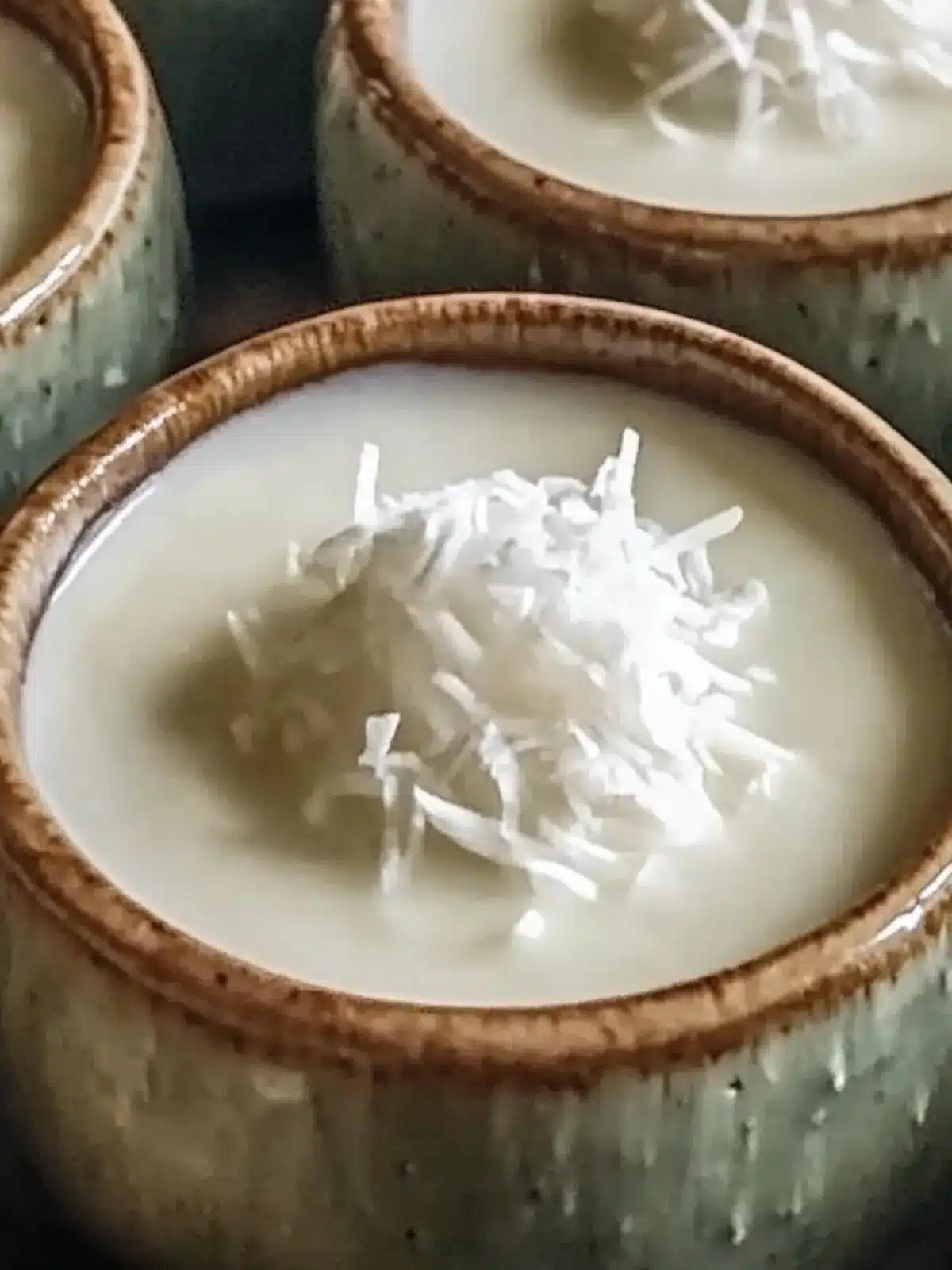
Delightful Thai Coconut Custard for a Sweet Escape
Ingredients
Equipment
Method
- Lightly grease 12 small ceramic cups or mini muffin pans with oil to prevent sticking.
- In a bowl, whisk together the rice flour, tapioca flour, pandan juice, palm sugar, and salt until smooth.
- Pour the mixture into prepared cups, filling each halfway. Steam over medium heat for 5-6 minutes until set.
- Whisk together the coconut cream, additional rice flour, and salt until smooth.
- Pour the coconut cream mixture over the bottom layer in the cups. Steam for an additional 5-7 minutes until set.
- Remove from steamer and let cool slightly before serving.