
There’s a moment in the kitchen when the aroma of spices and vegetables dancing in hot oil brings a smile, igniting a sense of comfort. That’s exactly how I felt the first time I whipped up this Vegan Katsu Curry. As I watched the vibrant colors of sweet potatoes and eggplants transform into crispy delights, I knew I had discovered something special.
This recipe isn’t just about nourishment; it celebrates the joy of cooking and sharing with loved ones. Whether you’re a devoted chef or someone seeking a flavorful plant-based option, this Vegan Katsu Curry combines the richness of coconut milk with a savory blend of spices, offering both heartiness and a touch of elegance. It’s quick to prepare, making it ideal for busy weeknights, yet impressive enough to wow guests at your next gathering.
Ready to bring this culinary delight to your table? Let’s dive in and explore how to create a comforting, delicious meal that’s sure to please everyone!

Why is Vegan Katsu Curry a Must-Try?
Unforgettable Flavor: The creamy coconut sauce combined with aromatic spices creates a symphony of flavors.
Quick Preparation: Ready in under 30 minutes, this dish is perfect for busy weeknights!
Versatile Ingredients: Feel free to experiment with your favorite vegetables or try air-frying for a healthier twist.
Family-Friendly: This recipe is sure to delight kids and adults alike, making it a crowd-pleaser at any table.
Vegan Comfort Food: Satisfy your cravings without sacrificing ethical choices or health. Dive into a bowl of joy that’s both nourishing and delicious!
Vegan Katsu Curry Ingredients
For the Sauce
• Onion – adds sweetness and depth to the curry sauce.
• Garlic (2 cloves) – provides aromatic flavor.
• Carrot (1) – introduces natural sweetness and vibrant color.
• Ginger (1 thumb-sized piece) – enhances flavor with its warmth and spiciness.
• Curry Powder (2 tablespoons) – the main spice blend that provides the dish’s signature vegan taste; use mild or spicy according to preference.
• Turmeric Powder (1 teaspoon) – adds vibrant color and health benefits.
• All-Purpose Flour (1 tablespoon) – thickens the curry sauce; gluten-free flour can be substituted.
• Vegetable Stock (1½ cups) – acts as the base for the sauce, providing necessary liquid.
• Coconut Milk (½ cup) – adds creaminess and richness; consider cashew or soy cream for alternatives.
• Soy Sauce (2 teaspoons) – provides savory umami flavor; substitute with tamari for gluten-free.
• Maple Syrup (1 teaspoon) – naturally sweetens to balance the spices.
For the Vegetables
• Eggplant/Aubergine (1) – primary vegetable for breading; can substitute with zucchini or pumpkin.
• Sweet Potato (1) – a sweet, starchy vegetable that provides depth.
For the Batter
• Plant-Based Milk (1 cup) – use unsweetened varieties for the best flavor.
• Breadcrumbs (1½ cups) & Cornflakes (½ cup) – creates the crispy coating; consider panko for a crunchier texture.
Each ingredient plays a crucial role in crafting the delightful experience of vegan katsu curry, with the perfect balance of flavors ready to warm your heart!
How to Make Vegan Katsu Curry
-
Prepare the Curry Sauce: Roughly chop the onion, garlic, ginger, and carrot. Heat oil in a pot over medium heat, add the chopped ingredients, and cook until softened, about 5-7 minutes. Add curry and turmeric powders; cook for 1 minute until fragrant. Stir in flour, then gradually pour in vegetable stock. Simmer until the carrot is tender, around 10 minutes.
-
Blend the Sauce: Carefully transfer the mixture to a blender, adding the coconut milk, soy sauce, and maple syrup. Blend until smooth and creamy, and set aside.
-
Prepare the Vegetables: Peel and slice the sweet potato and eggplant into rounds. Make sure they are evenly cut for consistent cooking.
-
Make the Batter: In a bowl, mix the flour, black pepper, salt, coriander, cumin, and plant-based milk until you have a smooth batter. It should be thick enough to coat the vegetables well.
-
Bread the Vegetables: Dip each sliced vegetable into the batter, allowing excess to drip off. Then, coat them in the mixed breadcrumbs and cornflakes for an extra crispy texture.
-
Fry or Air-Fry: Heat oil in a skillet over medium-high heat (or use an air fryer). Cook the breaded vegetables until golden brown and crisp, about 3-4 minutes per side. Ensure they’re crispy on the outside.
-
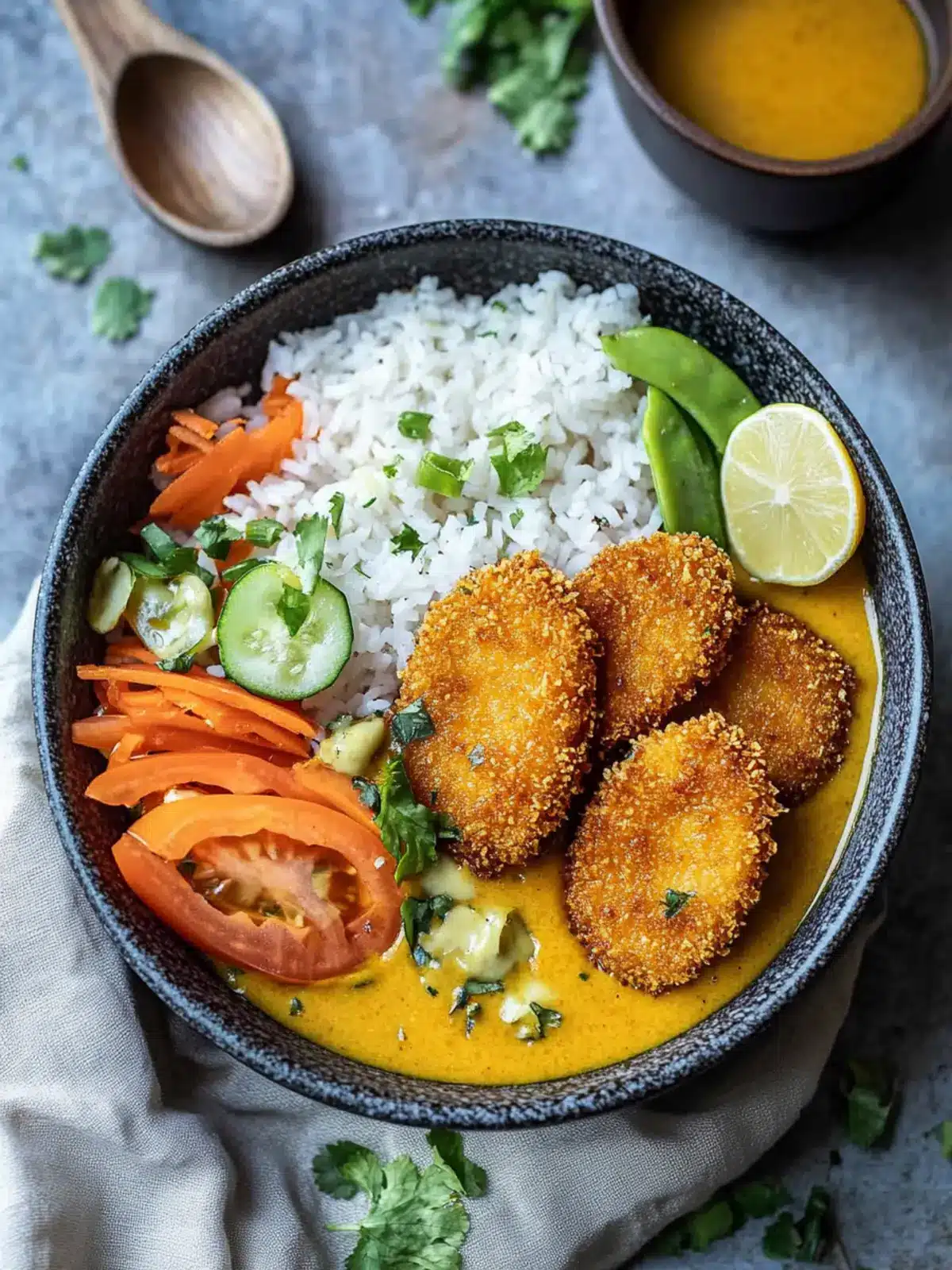
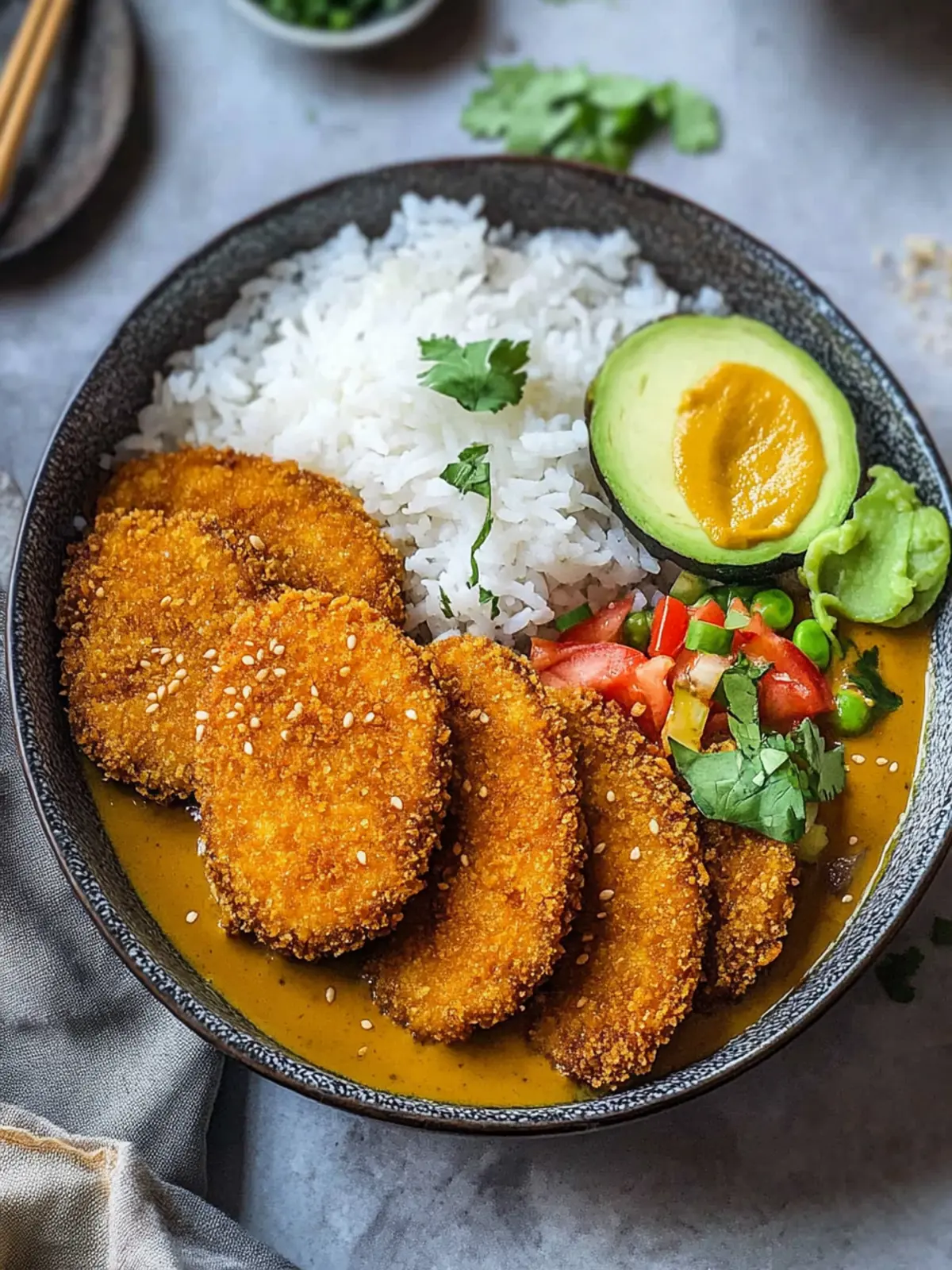
Serve: Place the crispy vegetables over a bed of steamed rice and generously drizzle with the delicious curry sauce. Garnish with sesame seeds and chopped spring onions for an extra pop of flavor.
Optional: Serve with pickled veggies for a refreshing contrast.
Exact quantities are listed in the recipe card below.
Storage Tips for Vegan Katsu Curry
Fridge: Store leftover Vegan Katsu Curry in airtight containers for up to 3-4 days. Keep the sauce, vegetables, and rice separate to maintain texture.
Freezer: For longer storage, freeze the curry sauce in airtight containers for up to 2 months. The breaded vegetables can be frozen separately; just ensure they’re fully cooled before wrapping.
Reheating: When ready to enjoy, thaw in the fridge overnight and reheat the sauce gently on the stove. Crisp up the vegetables in the air fryer or oven for that delightful crunch.
Meal Prep: To make meal prep easier, prepare the curry sauce ahead and freeze it. When you crave this dish, just fry fresh vegetables and enjoy a wholesome homemade meal!
What to Serve with Vegan Katsu Curry?
Elevate your dining experience with delightful pairings that complement this flavorful plant-based dish.
- Steamed Jasmine Rice: A classic accompaniment that soaks up the rich curry sauce, making every bite satisfying.
- Pickled Vegetables: The tangy and crunchy contrast of pickled veggies adds brightness and balances the dish’s richness. Think of zesty pickles to awaken your palate.
- Fresh Cucumber Salad: Crisp cucumbers tossed in a light sesame dressing enhance the meal with freshness and texture. This cooling salad perfectly offsets the warmth of the curry.
- Miso Soup: A warm bowl of miso soup with seaweed and tofu adds umami depth and a comforting touch to your meal. Its lightness harmonizes beautifully with the heartiness of the curry.
- Avocado Toast: Creamy avocado spread on crusty sourdough elevates your meal and brings a satisfying texture. A sprinkle of sesame seeds will tie it all together.
- Green Tea: This soothing drink complements the dish while aiding digestion, making it an excellent beverage choice for a wholesome meal.
- Coconut Sorbet: For dessert, a light coconut sorbet is a refreshing way to cleanse your palate after the savory curry, highlighting the creamy flavors from the dish.
Expert Tips for Vegan Katsu Curry
-
Perfect Temperature: Ensure the oil is hot enough before frying the vegetables; this helps achieve that signature crispy texture everyone loves in Vegan Katsu Curry.
-
Healthier Option: Consider air-frying the breaded vegetables with just a light spray of oil for a guilt-free alternative that’s still deliciously crispy.
-
Make Ahead: Prepare the curry sauce in advance and store it in the fridge. When you’re ready, simply fry fresh vegetables for a quick dinner.
-
Gluten-Free Swaps: Use gluten-free flour, tamari for soy sauce, and gluten-free breadcrumbs if you need to accommodate dietary restrictions without sacrificing taste.
-
Experiment with Veggies: Feel free to substitute the sweet potato or eggplant with other favorites like zucchini, mushrooms, or even tofu for added protein and variety.
Vegan Katsu Curry Variations
Feel free to explore and make this recipe uniquely yours with these creative twists!
- Gluten-Free: Substitute all-purpose flour and breadcrumbs with gluten-free alternatives for a scrumptious gluten-free version.
- Extra Veggies: Add sliced bell peppers or broccoli for vibrant color and added nutrition in the curry and breading.
- Baked Option: Bake the breaded vegetables at 400°F (200°C) for 20-25 minutes, allowing them to cook through and become crispy with a touch less oil.
- Spicy Kick: For those who enjoy heat, mix in chili flakes or use a spicy curry powder to elevate the dish’s flavor profile.
- Protein Boost: Incorporate breaded tofu or tempeh for a heartier meal that packs a protein punch, perfect for a filling dinner.
- Creamy Twist: Try adding a dollop of nut butter or tahini into the coconut milk for an extra layer of creaminess and flavor in the sauce.
- Curry Variations: Experiment with different curry pastes, such as red or green curry, to change up the flavor while maintaining the recipe’s essence.
- Herb Infusion: Add fresh herbs like cilantro or basil for a refreshing note on top before serving, turning every bite into a burst of flavor!
Make Ahead Options
These Vegan Katsu Curry preparations are perfect for making ahead of time, helping busy home cooks save precious moments during the week! You can prepare the curry sauce up to 3 days in advance; just cool it completely, then store it in an airtight container in the refrigerator to preserve its rich flavors. For the vegetables, slice and coat them in the batter 24 hours before frying, and refrigerate to keep them fresh and ready to fry. When you’re ready to serve, simply reheat the curry sauce in a pot while frying the breaded vegetables until golden. This way, you’ll enjoy a delightful, homemade meal with minimal stress!
Vegan Katsu Curry Recipe FAQs
What is the best way to select ripe vegetables for Vegan Katsu Curry?
Absolutely! When selecting sweet potatoes, look for ones that are firm with smooth skin and free of dark spots. For eggplants, opt for shiny, vibrant purple ones that feel heavy for their size. Avoid any that have soft spots or wrinkles, as they may be overripe.
How should I store leftover Vegan Katsu Curry?
Very simple! Store leftover curry sauce, crispy vegetables, and rice separately in airtight containers in the fridge for up to 3-4 days. This will help maintain their unique textures and flavors. Just reheat each component individually before enjoying again!
Can I freeze components of Vegan Katsu Curry?
Definitely! You can freeze the curry sauce in airtight containers for up to 2 months. Allow it to cool completely before sealing. For the breaded vegetables, ensure they are fully cooled before freezing them in a single layer on a baking sheet, then transfer to a freezer-safe bag or container. This method helps retain their crispy texture when reheated.
What should I do if my batter is too thick for the vegetables?
If you find your batter thicker than desired, simply add a splash of plant-based milk to loosen it up. Mix well until you reach a consistency that evenly coats the vegetables without being overly runny. It should be thick enough to cling but still pourable.
Is Vegan Katsu Curry suitable for pets or those with allergies?
This delicious dish is primarily plant-based and free of common allergens, but be cautious with soy sauce if your family members have soy allergies. It’s best to avoid giving this directly to pets, particularly since the spices and salt can upset their tummies. Always double-check with a vet if unsure!
Can I customize the curry spice level?
Very much so! Adjust the spice level according to your preference by choosing different types of curry powder—mild for those who prefer less heat, and spicy for those looking for a kick! You can also add chili flakes during cooking for an extra spicy punch. Enjoy experimenting with flavors!

Crispy Vegan Katsu Curry That Will Delight Your Family
Ingredients
Equipment
Method
- Prepare the Curry Sauce: Roughly chop the onion, garlic, ginger, and carrot. Heat oil in a pot over medium heat, add the chopped ingredients, and cook until softened, about 5-7 minutes. Add curry and turmeric powders; cook for 1 minute until fragrant. Stir in flour, then gradually pour in vegetable stock. Simmer until the carrot is tender, around 10 minutes.
- Blend the Sauce: Carefully transfer the mixture to a blender, adding the coconut milk, soy sauce, and maple syrup. Blend until smooth and creamy, and set aside.
- Prepare the Vegetables: Peel and slice the sweet potato and eggplant into rounds. Make sure they are evenly cut for consistent cooking.
- Make the Batter: In a bowl, mix the flour, black pepper, salt, coriander, cumin, and plant-based milk until you have a smooth batter. It should be thick enough to coat the vegetables well.
- Bread the Vegetables: Dip each sliced vegetable into the batter, allowing excess to drip off. Then, coat them in the mixed breadcrumbs and cornflakes for an extra crispy texture.
- Fry or Air-Fry: Heat oil in a skillet over medium-high heat (or use an air fryer). Cook the breaded vegetables until golden brown and crisp, about 3-4 minutes per side.
- Serve: Place the crispy vegetables over a bed of steamed rice and generously drizzle with the delicious curry sauce. Garnish with sesame seeds and chopped spring onions for an extra pop of flavor.