
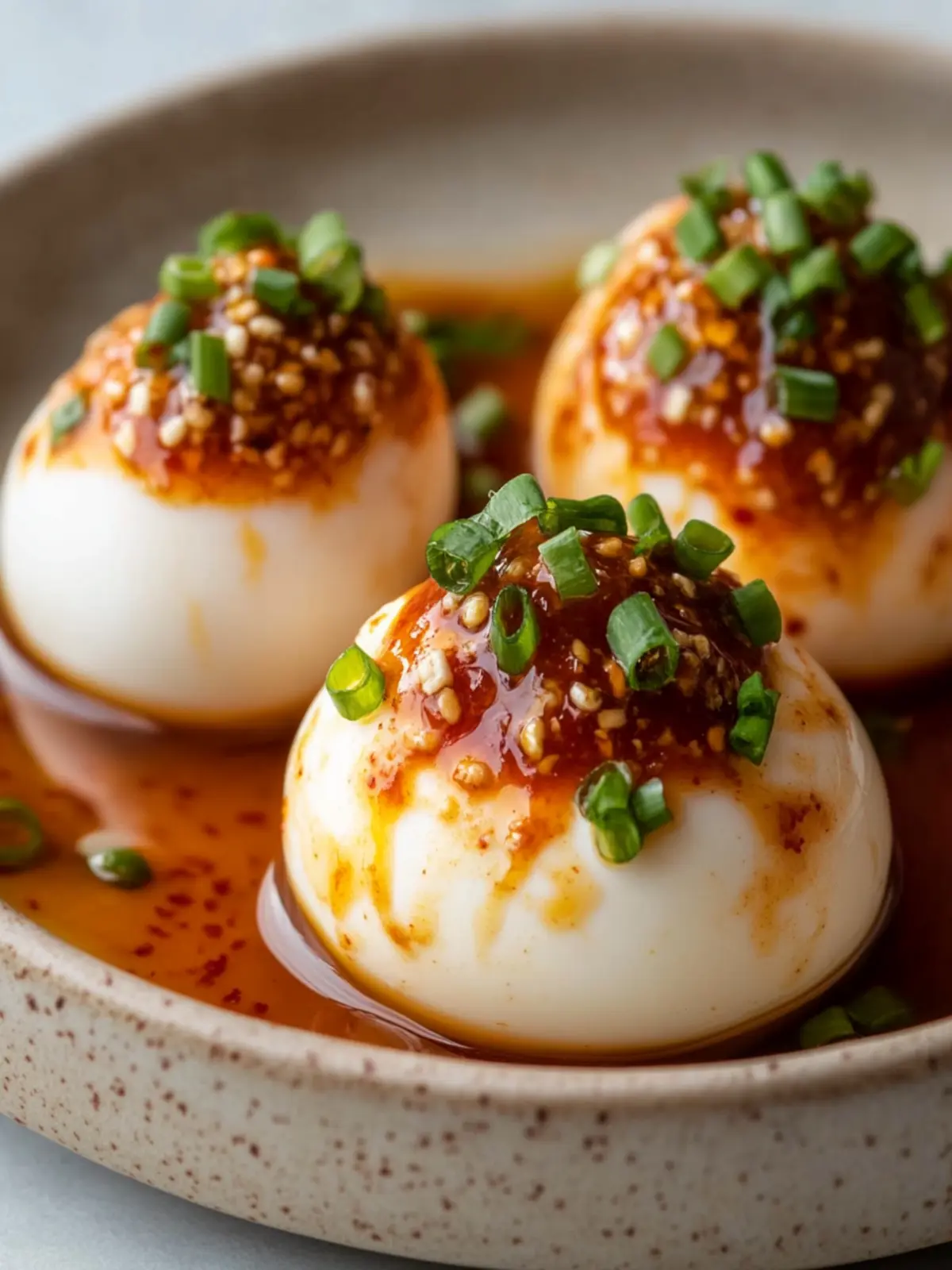
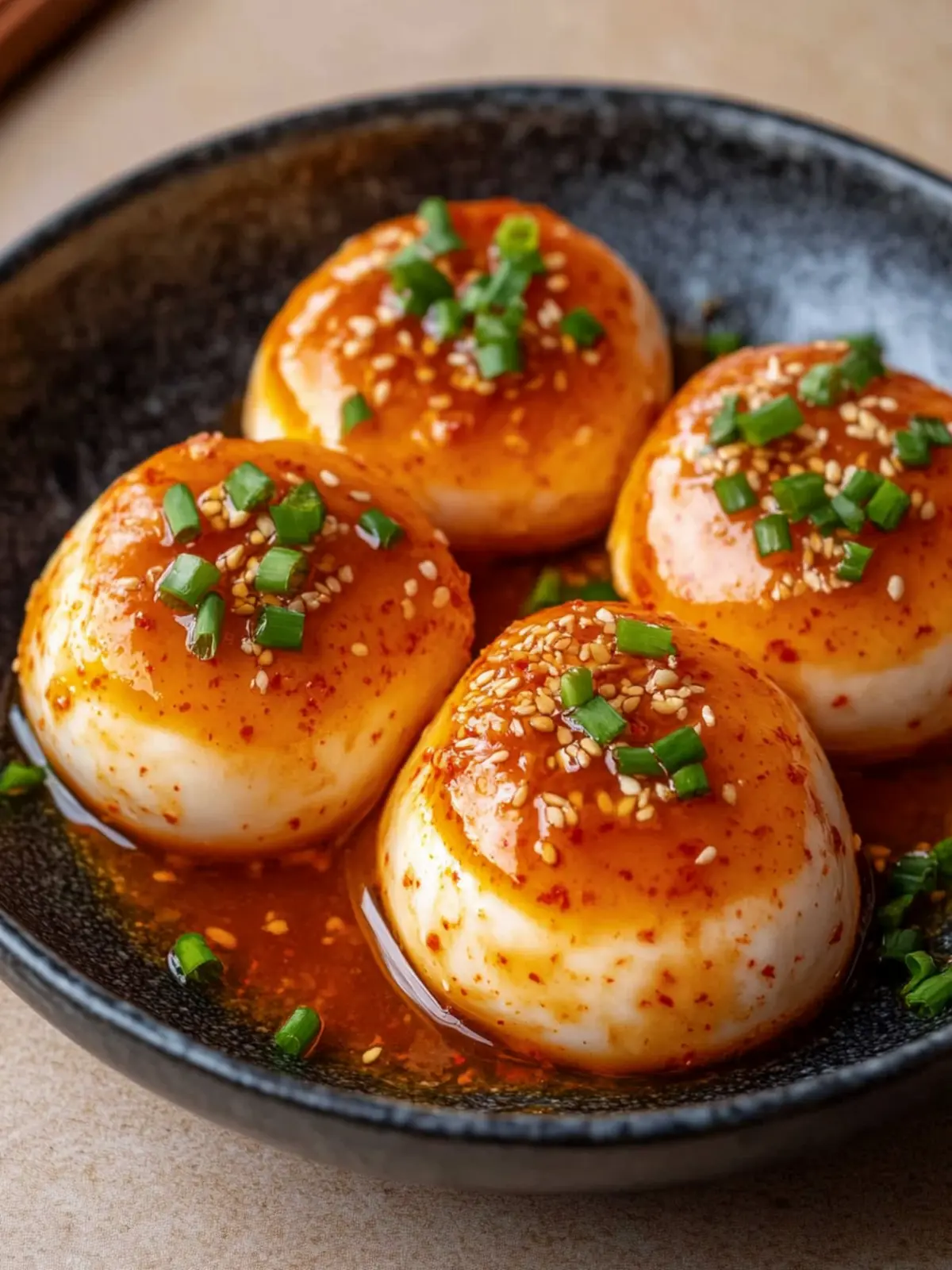
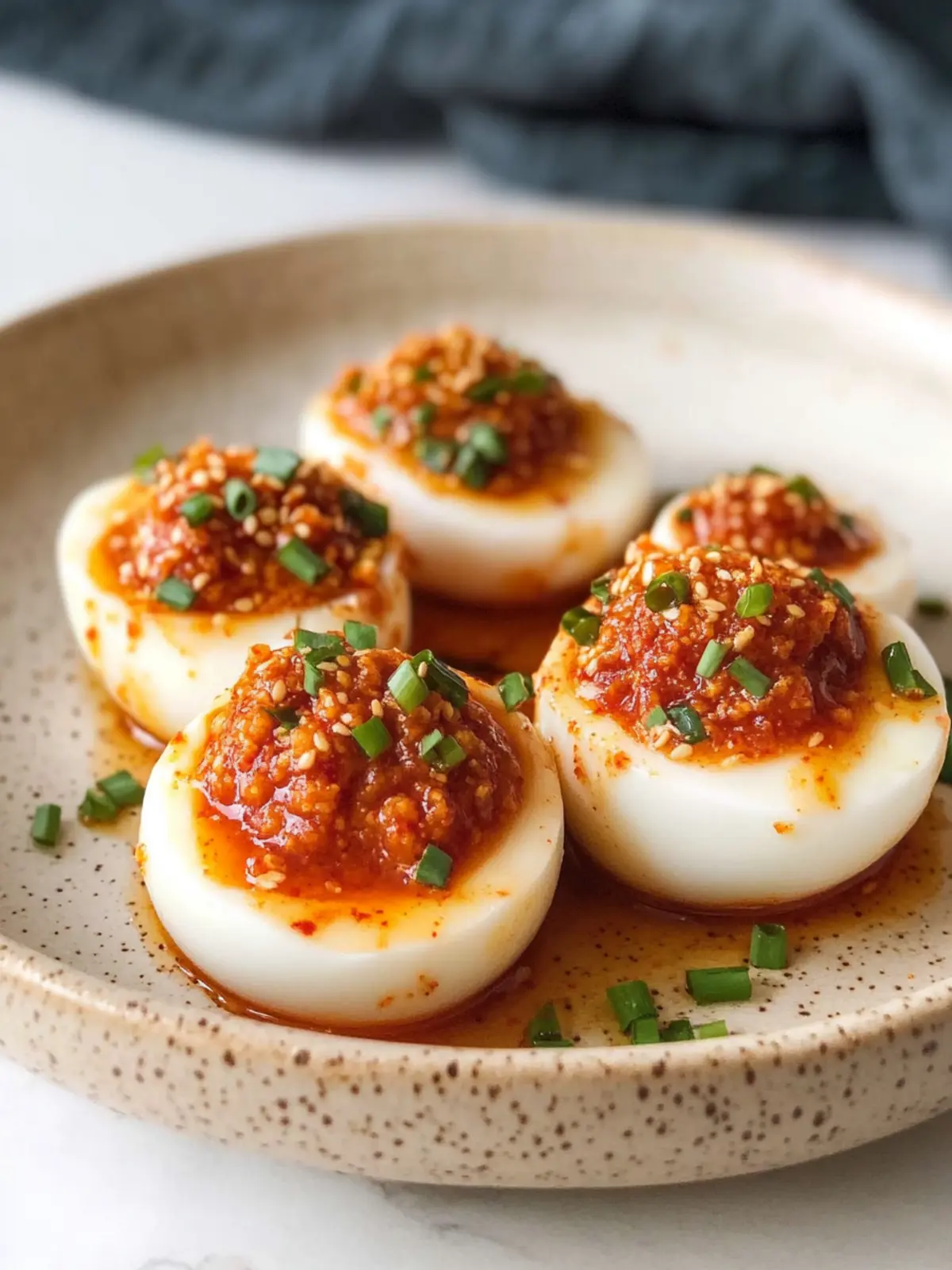
The first time I tried Gochujang Butter Eggs, it was like uncovering a hidden treasure in my kitchen. Imagine the rich, spicy aroma enveloping the room, as soft-boiled eggs take a swim in a luscious sauce of gochujang and butter. It was a delightful surprise that transformed a simple snack into a gourmet experience!
This dish is not just quick and easy to whip up; it’s also a wonderful way to explore the vibrant world of Korean cuisine. The combination of savory garlic and creamy butter with the uniquely bold flavor of gochujang creates an umami explosion that’s hard to resist. Whether you’re looking for a satisfying protein-rich snack or a flavor-packed meal to impress your family, these Gochujang Butter Eggs are a versatile addition to your menu that is sure to become a staple in your home. Let’s dive into this delectable adventure!

Why are Gochujang Butter Eggs so irresistible?
Easy to Prepare: With just a few simple ingredients, this recipe comes together in no time, perfect for busy weeknights or when you’re craving a quick snack.
Bold Flavors: The rich combination of gochujang, garlic, and butter gives these eggs a robust flavor profile that will tantalize your taste buds.
Nutrient-Packed: Eggs are a fantastic source of protein, making this a satisfying option for a healthy snack or light meal.
Customizable: Want to spice things up? Adjust the gochujang according to your heat preference or toss in some vegetables for added nutrition.
Crowd-Pleaser: Whether served as an appetizer or paired with rice for a full meal, these eggs are sure to impress family and friends alike.
Gochujang Butter Eggs Ingredients
For the Eggs
• Eggs – Large eggs provide the best texture and protein.
• Apple Cider Vinegar – Enhances flavor and makes peeling easier.
• Kosher Salt – Essential for seasoning the boiling water.
For the Sauce
• Salted Butter – Adds a creamy richness that balances the spice.
• Avocado Oil – A neutral oil for sautéing; can substitute with any light oil.
• Garlic – Freshly minced for a robust flavor; avoid bottled for the best taste.
• Shallot – Finely minced for a subtle sweetness in the sauce.
• Gochujaru – Korean red pepper flakes that can be adjusted for desired heat.
• Gochujang – Must-have fermented chili paste for a spicy-sweet kick.
• Light Brown Sugar – Balances the heat and enhances flavor; regular sugar works too.
• Soy Sauce – Adds depth of umami; use low-sodium for a healthier option.
• Dashi Stock – A savory base; substitute with chicken or vegetable broth if needed.
For Garnishing
• Chives – Chopped for a fresh, mild onion flavor and vibrant color.
Serving Ideas
• Jasmine Rice or Sourdough Bread – Perfect complements to soak up the delicious sauce.
How to Make Gochujang Butter Eggs
-
Prepare Water: In a medium saucepan, combine 5 cups of water, apple cider vinegar, and salt. Bring this mixture to a rolling boil, ensuring the perfect base for cooking the eggs.
-
Boil Eggs: Carefully add the eggs using a spider strainer to prevent cracking. Cover and boil for 6 minutes for soft-boiled or 9 minutes for hard-boiled eggs, depending on your preference for doneness.
-
Ice Bath: While the eggs are boiling, prepare an ice bath in a bowl. After the cooking time, transfer the cooked eggs into the ice bath for 6 minutes to quickly halt the cooking process and make them easier to peel.
-
Make Sauce: In a skillet over low heat, melt the butter and avocado oil together. Add the minced garlic and shallots to the skillet, and cook for 4 minutes without browning to keep the flavors delicate.
-
Add Seasoning: Raise the heat slightly, stir in the gochujaru, and cook for 1 minute. Next, add the gochujang, light brown sugar, and soy sauce; cook for another minute before adding the dashi stock. Simmer until slightly thickened.
-
Combine: Peel the cooled eggs gently, then place them in a bowl. Pour the rich sauce over the eggs and garnish with freshly chopped chives. Serve immediately with jasmine rice or toasted sourdough.
Optional: Drizzle with a bit of sesame oil for an extra flavor boost.
Exact quantities are listed in the recipe card below.
Storage Tips for Gochujang Butter Eggs
Fridge: Store Gochujang Butter Eggs in an airtight container for up to 1-2 days. The sauce may thicken as it cools, so keep this in mind when reheating.
Reheating: Gently reheat the eggs in a skillet over low heat, adding a splash of water or broth to loosen the sauce if needed. Avoid overheating to maintain the eggs’ delicate texture.
Freezer: For longer preservation, freeze the sauce separately from the eggs. It can be stored in a freezer-safe container for up to 1 month. Defrost in the fridge before reheating.
Best Served Fresh: Though they can be stored, Gochujang Butter Eggs are best enjoyed fresh to savor the rich flavors and texture!
Make Ahead Options
Preparing Gochujang Butter Eggs ahead of time is a fantastic way to save busy weeknights! You can boil and peel the eggs up to 24 hours in advance, storing them in a covered container in the refrigerator. The sauce can also be made ahead; simply prepare the gochujang butter sauce and refrigerate it for 3 days. To maintain the quality, reheat the sauce gently on the stove to prevent separating. When you’re ready to enjoy, simply warm the eggs briefly and drizzle the heated sauce over them, garnishing with fresh chives. This makes for a quick, delicious meal with minimal effort—perfect for those on-the-go days!
What to Serve with Gochujang Butter Eggs?
Enhance your meal with delightful pairings that elevate the warm, spicy flavors of this Korean-inspired dish.
-
Jasmine Rice: Serves as a fluffy base that absorbs the rich, gochujang sauce, adding a comforting element to your meal.
-
Toasted Sourdough Bread: The crunchy exterior and soft interior perfectly complement the creamy butter sauce, ideal for a satisfying bite.
-
Stir-Fried Greens: Bright and lightly salted vegetables add a fresh crunch, balancing the richness of the eggs. Think spinach or bok choy for an authentic touch.
-
Pickled Vegetables: A tangy side, like kimchi or pickled radishes, contrasts beautifully with the savory eggs, introducing a refreshing bite.
-
Sesame Oil Drizzle: A finishing touch over the dish enhances nuttiness and depth of flavor, tying together all its wonderful elements.
-
Cold Beer or Soju: A refreshing drink pairing that cuts through the richness and enhances the overall dining experience.
-
Spicy Cucumber Salad: A cool and crunchy salad adds a refreshing contrast to the warmth of the eggs, making each bite a flavorful journey.
-
Fruit Dessert: End on a sweet note with fresh mango or strawberries, cleansing the palate after the scrumptious spicy flavors of the dish.
Gochujang Butter Eggs Variations
Feel free to get creative and customize your Gochujang Butter Eggs for a personal touch that excites your taste buds.
- Sambal Oelek: Swap gochujang with sambal oelek for a fresh, tangy kick that adds a twist to the flavor profile.
- Vegetable Boost: Stir in sautéed spinach or mushrooms to the sauce for added nutrients and a delightful texture contrast.
- Sesame Delight: Drizzle with sesame oil or sprinkle sesame seeds on top to infuse a nutty aroma that complements the dish beautifully.
- Coconut Creamy: Zoom into a tropical flavor by mixing in a spoonful of coconut milk into the sauce for a creamy experience.
- Herb Wonderland: Fresh herbs like cilantro or parsley can be tossed in as a garnish, adding brightness and an explosion of freshness.
- Spicy Surprise: For those who crave more heat, increase the amount of gochujaru or add a splash of sriracha to the sauce.
- Zesty Lemon: A squeeze of fresh lemon juice right before serving can brighten up the overall flavor, giving a refreshing zing to the dish.
- Tofu Twist: Replace eggs with silken tofu for a plant-based alternative that absorbs the lovely sauce while boosting the protein content.
Expert Tips for Gochujang Butter Eggs
-
Timing is Key: To achieve the perfect boiled egg, stick closely to the recommended boiling times—6 minutes for a soft center and 9 for hard-boiled.
-
Spider Strainer Usage: Use a spider strainer when transferring eggs to prevent cracks. This handy tool is essential for handling delicate eggs safely.
-
Watch the Garlic: Avoid overcooking the garlic in the sauce; cooking it for too long can impart a bitter flavor. Aim for a light golden color instead.
-
Ice Bath Importance: Always use an ice bath after boiling. It not only halts the cooking but also makes peeling the eggs much easier.
-
Taste as You Go: Adjust the spiciness of the sauce by tweaking the amount of gochujang or gochujaru based on your preferences for heat in these Gochujang Butter Eggs.
Gochujang Butter Eggs Recipe FAQs
How do I select the best eggs for Gochujang Butter Eggs?
Absolutely! When choosing eggs, go for large, fresh ones for the best texture and protein content. Look for eggs with clean, uncracked shells and check the expiration date to ensure freshness.
How should I store leftover Gochujang Butter Eggs?
Very! Store your Gochujang Butter Eggs in an airtight container in the refrigerator for up to 1-2 days. The sauce may thicken as it cools, so when you reheat, add a little splash of water or broth to loosen it up.
Can I freeze Gochujang Butter Eggs?
Yes, you can! However, it’s best to freeze just the sauce. Pour the cooled gochujang butter sauce into a freezer-safe container and it will keep for up to 1 month. When you’re ready to use it, defrost it in the fridge overnight and gently reheat it before serving.
What if my eggs are difficult to peel after boiling?
Oops! If your eggs seem stubborn, it might be due to their freshness—older eggs typically peel easier. For the best peeling experience, you can add a bit of salt to the boiling water or use the ice bath method I mentioned, which halts cooking quickly and helps the shells separate.
Are there any dietary considerations for Gochujang Butter Eggs?
Of course! Gochujang can contain gluten and may not be suitable for those with gluten intolerance; look for certified gluten-free brands. Also, if you’re cooking for someone with a sensitivity to spicy foods, you can adjust the amount of gochujang according to their heat tolerance.
How can I customize Gochujang Butter Eggs to suit my taste?
Absolutely! You can tweak the spice level by adjusting the gochujang or gochujaru amounts. If you want a milder flavor, consider adding sautéed vegetables like spinach or mushrooms into the sauce. Alternatively, you can swap in different herbs or oils, like sesame oil, for unique flavor twists!
Gochujang Butter Eggs: Your New Flavorful Snack Obsession
Ingredients
Equipment
Method
- In a medium saucepan, combine 5 cups of water, apple cider vinegar, and salt. Bring to a rolling boil.
- Carefully add the eggs using a spider strainer to prevent cracking. Cover and boil for 6 minutes for soft-boiled or 9 minutes for hard-boiled.
- Prepare an ice bath in a bowl. After cooking time, transfer eggs to the ice bath for 6 minutes to halt cooking.
- In a skillet over low heat, melt the butter and avocado oil. Add minced garlic and shallots, cooking for 4 minutes.
- Raise the heat slightly, stir in gochujaru, and cook for 1 minute. Add gochujang, light brown sugar, and soy sauce; simmer until slightly thickened.
- Peel cooled eggs and place them in a bowl. Pour sauce over eggs, garnish with chives. Serve with jasmine rice or sourdough.