
There’s nothing quite like the warm, tantalizing aroma of saffron wafting through the kitchen, transporting me straight to the heart of Persian culinary magic. When I first tried making Tahdig, the crispy rice dish that boasts a golden, crunchy bottom, I was captivated by its unique texture and rich flavor. This delightful recipenot only satisfies my cravings for homemade comfort food but also impresses friends and family with its stunning presentation.
On a lazy weekend afternoon, I dove into the world of Persian cuisine. I was enchanted by the way effortless ingredients like basmati rice and olive oil can create something so extraordinary. Whether you’re looking to elevate a casual dinner or embrace your inner foodie, Tahdig provides the perfect opportunity to showcase your cooking skills. Get ready to discover the simple steps to transform your dining experience with a dish that’s as satisfying to make as it is to eat!
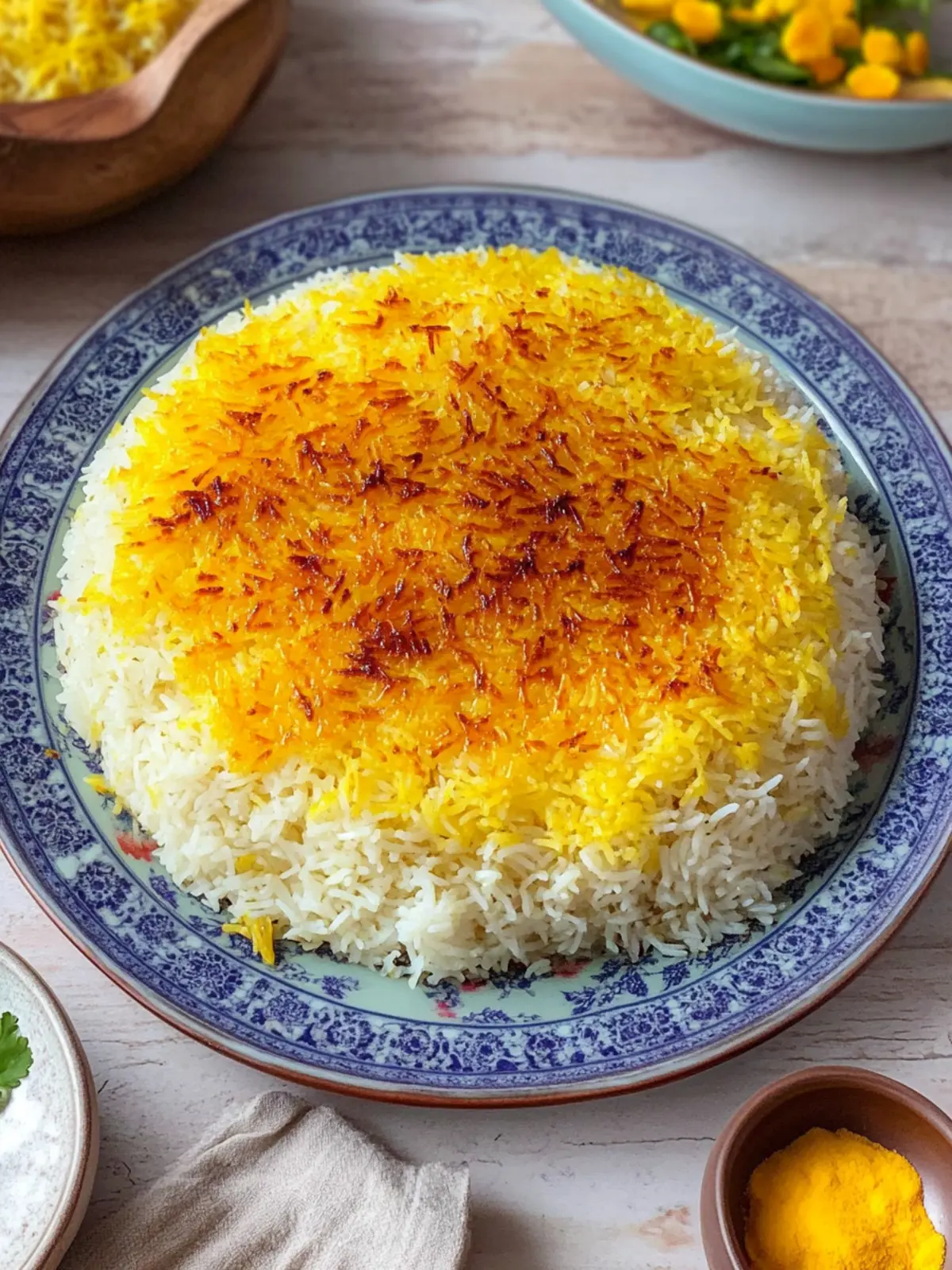
Why Is Tahdig So Special for Home Cooks?
Texture at its finest: The crispy bottom and fluffy rice create a delightful contrast that will wow your taste buds.
Saffron’s allure: The warm, aromatic essence of saffron elevates this dish, making it truly memorable.
Versatile side: Tahdig pairs beautifully with a variety of proteins and veggies, making it a perfect addition to any meal.
Impressive presentation: Invert your skillet for a stunning reveal that will steal the show at your dinner table.
Easy to master: With just a few ingredients and straightforward steps, anyone can create restaurant-quality Tahdig at home.
For a bonus, try pairing it with your favorite Persian stews for a delightful meal!
Tahdig Ingredients
• The essential components for this delicious Persian rice dish.
For the Rice
- Basmati rice – A long-grain rice that becomes tender and fluffy when cooked, providing the perfect base for tahdig.
- Salt – Essential for soaking and boiling the rice, enhancing its flavor throughout the cooking process.
For the Flavor
- Saffron threads – Blooming this aromatic spice in hot water infuses the rice with a rich golden color and distinctive taste.
- Ground turmeric – Adds a subtle warmth and golden hue to the base flavor profile of your tahdig.
For Cooking
- Olive oil – Ensures the rice crisps beautifully and adds a light, fruity flavor to the finished dish.
With these simple yet crucial ingredients, you will create an unforgettable Tahdig that brings a taste of Persia right into your kitchen!
How to Make Tahdig
-
Rinse the rice several times in a large bowl until the water runs completely clear. This helps remove excess starch, resulting in fluffy rice. Soak with a generous pinch of salt for about 20 minutes while preparing to boil water. Reserve 3 tablespoons of hot water for blooming the saffron.
-
Boil a large pot of generously salted water. Once boiling, drain the soaked rice and add it to the water. Cook uncovered on medium-high heat for 7–8 minutes. The rice should be tender outside while remaining firm inside. Drain and rinse briefly under cold water to halt cooking.
-
Crush the saffron threads if needed, then add them to the reserved hot water and let bloom for a few minutes. This step is key for layering that exquisite saffron flavor!
-
Heat a 10–12 inch nonstick skillet over medium heat. Pour in the olive oil, bloomed saffron water, and turmeric, swirling until evenly coated. Spoon a thin, even layer of rice onto this mixture, followed by the remaining rice to form a gentle mound. Poke a few holes into the rice to allow steam to escape.
-
Cover the skillet with a clean kitchen towel-wrapped lid, and cook on medium to medium-high heat for about 30–35 minutes. Listen closely for gentle crackling sounds, indicating that the tahdig is forming perfectly.
-
Invert the skillet onto a serving plate, allowing the lovely golden, crispy tahdig to be revealed. Alternatively, you can spoon out the rice and break the tahdig into pieces to serve alongside.
Optional: Serve with your favorite yogurt or a drizzle of olive oil for extra flavor.
Exact quantities are listed in the recipe card below.
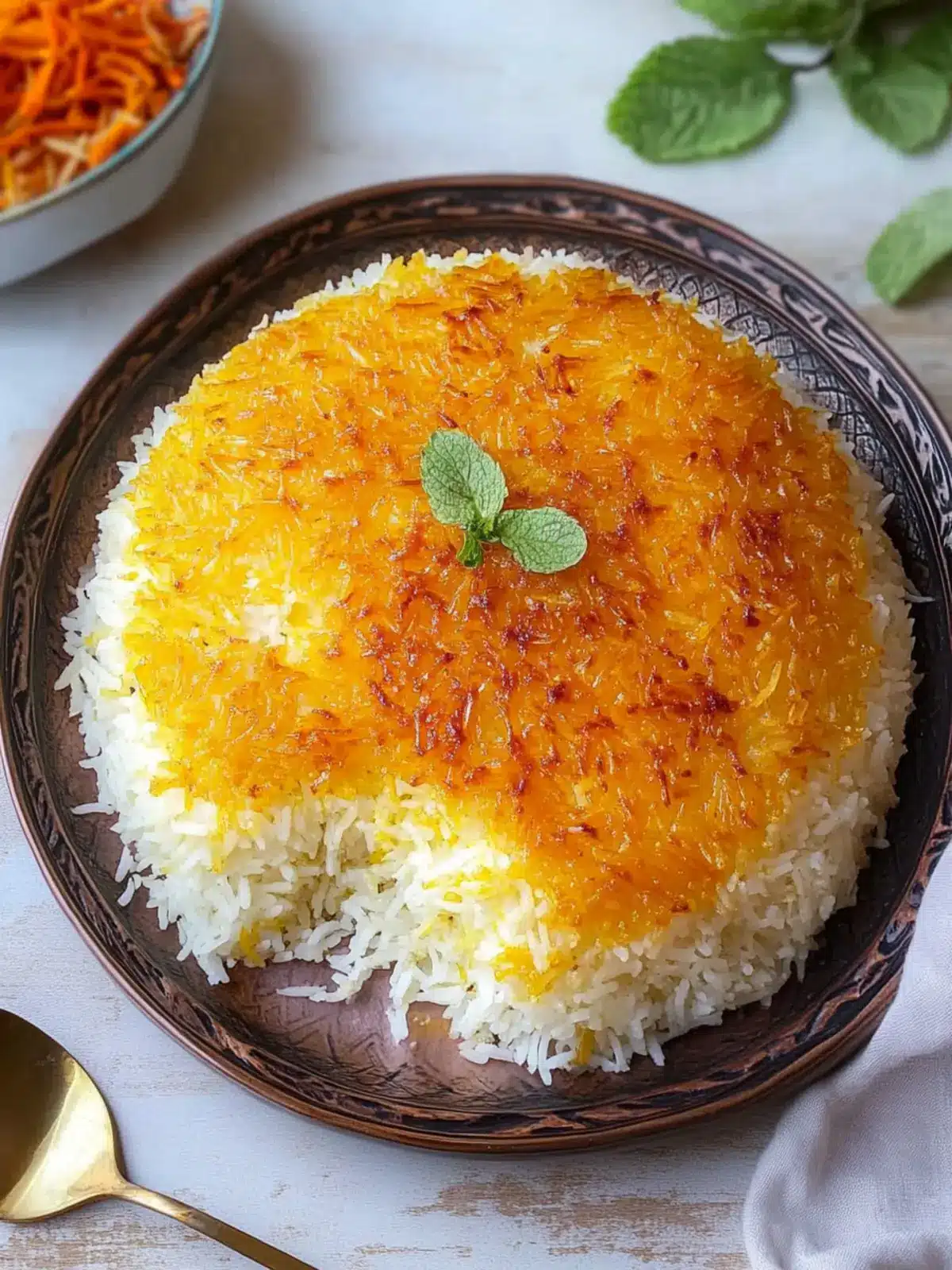
Tips for the Best Tahdig
-
Rice Rinsing: Rinse the rice thoroughly until the water runs clear to remove excess starch, which helps achieve that fluffy texture in your Tahdig.
-
Boiling Timing: Watch the rice closely while boiling. It should be tender but firm in the center—overcooked rice will lead to a mushy texture in your Tahdig.
-
Saffron Blooming: Never skip blooming the saffron in hot water; this step is essential for unlocking its beautiful color and intense flavor, which is key to perfect Tahdig.
-
Heat Control: Keep the heat at medium to medium-high. If it’s too low, your Tahdig may not form that perfect crispy bottom, and if too high, it may burn.
-
Inversion Technique: When inverting your Tahdig onto a plate, do it gently, ensuring the crispy layer remains intact. This adds an impressive touch to your presentation!
-
Serving Suggestions: Pair your Tahdig with yogurt or your favorite Persian stews for a complete meal that everyone will love.
How to Store and Freeze Tahdig
Room Temperature: Enjoy your Tahdig fresh, as it’s best consumed right after making. If leftover, store at room temperature for up to 2 hours to maintain its crispiness.
Fridge: Place any leftover Tahdig in an airtight container in the fridge for up to 3 days. To maintain the texture, consider reheating it in the oven for that crispy lift!
Freezer: You can freeze Tahdig for up to 2 months. Wrap it tightly in plastic wrap and then in aluminum foil to protect it from freezer burn.
Reheating: To reheat, place the frozen Tahdig in a preheated oven at 350°F (175°C) for about 15-20 minutes until heated through, helping restore its delightful crunch.
Make Ahead Options
These Tahdig (Persian Rice with Crispy Bottom) are perfect for meal prep enthusiasts! You can soak the rice and even pre-cook it up to 24 hours in advance, which will save you precious time on busy weeknights. Simply follow the initial steps of rinsing and soaking the rice, and once drained, store it in an airtight container in the refrigerator. Additionally, you can bloom the saffron and keep it ready for when you want to cook. When you’re ready to enjoy your Tahdig, heat up the skillet with olive oil and saffron water, add the rice, and follow the final steps to get that perfect crispy bottom. Trust me, your Tahdig will be just as delicious and impressive, making mealtime a breeze!
Tahdig Variations
Feel free to explore delightful twists that cater to your taste buds and dietary needs!
-
Vegetable Medley: Stir in a handful of sautéed vegetables like bell peppers and carrots for a colorful and nutritious boost. This not only elevates the dish but adds a delightful texture to every bite.
-
Saffron Alternative: Use turmeric alone for a striking yellow color if saffron isn’t available. The flavors will alter slightly, but it’ll still be delicious and visually appealing.
-
Garlic Infusion: Add minced garlic to the olive oil before layering the rice for a fragrant flavor. This extra depth will have everyone asking for your secret ingredient!
-
Spicy Kick: Mix in some smoked paprika or red pepper flakes for a hint of heat. Just a pinch will transform your tahdig into an exciting experience, perfect for heat lovers!
-
Nutty Addition: Fold in toasted slivered almonds or pistachios into the rice before cooking for a delightful crunch. Not only do they add a unique texture, but they also enhance the dish’s flavor profile.
-
Herbed Delight: Incorporate fresh herbs like dill or parsley for a burst of freshness that brightens the dish. The aroma alone will make your kitchen feel like a garden of flavors!
-
Lemon Zest: Grate a bit of lemon zest into the rice mix before cooking to instill a zesty brightness that contrasts beautifully with the richness of saffron. This elegant twist will add an unexpected delight in every bite.
-
Coconut Thai: Replace the olive oil with coconut oil for a tropical twist that complements the rice perfectly. This approach offers a soft, aromatic flavor that will transport your taste buds to the sunny beaches of Thailand.
With these variations, your Tahdig will always surprise and delight, leaving you eager to serve it at your next gathering!
What to Serve with Tahdig?
Elevate your dining experience with delicious sides that complement the crispy perfection of this Persian rice dish.
-
Grilled Lamb Chops: The rich, savory flavor of lamb pairs beautifully with the mild saffron notes in Tahdig.
-
Herbed Yogurt Sauce: A cool and creamy sauce enhances the dish, balancing the warmth of the saffron and turmeric.
-
Roasted Vegetables: Colorful, caramelized veggies add a sweet contrast that brightens up your plate and complements the rice’s texture.
-
Persian Khoresh: This fragrant Persian stew, filled with tender meat and spices, creates a satisfying meal when served alongside crispy Tahdig.
-
Fresh Salad Shirazi: The refreshing notes of cucumber, tomato, and herbs provide a crunchy, bright side that cuts through the richness of the rice.
-
Pickled Vegetables: A tangy assortment of pickled vegetables can add a delightful crunch and acidity, making each bite of Tahdig even more exciting.
-
Minted Lemonade: Enjoy a refreshing drink with a hint of mint that perfectly cleanses the palate between bites of your flavorful Tahdig.
-
Baklava: This sweet, layered pastry brings a delightful finish to the meal, making it truly memorable with its nutty flavors and honey syrup.
With these pairings, your Tahdig is sure to shine at the dinner table!
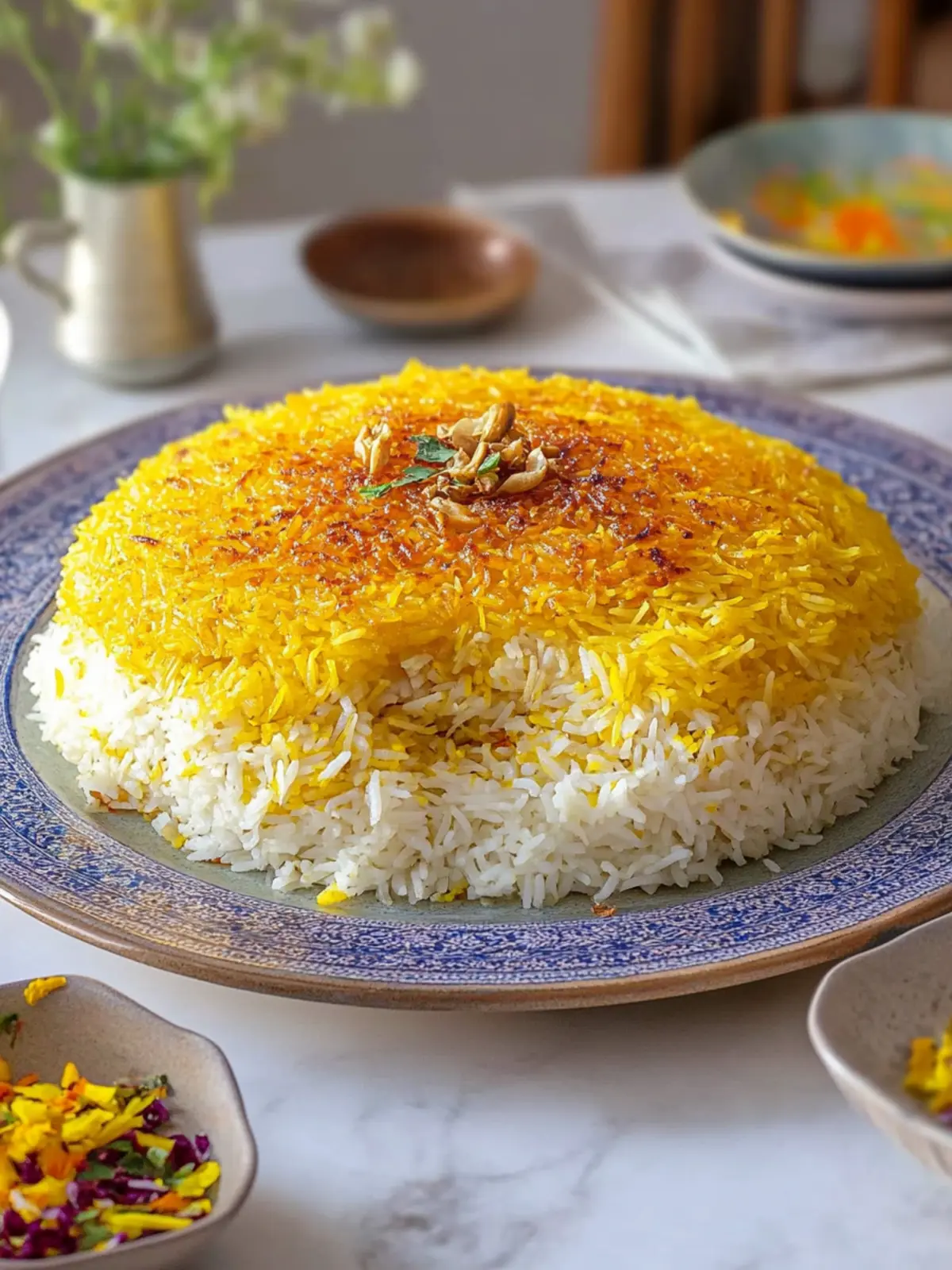
Tahdig (Persian Rice with Crispy Bottom) Recipe FAQs
What kind of basmati rice should I use for Tahdig?
Absolutely! Always opt for long-grain basmati rice for that perfect fluffy texture. Look for brands that specify they’re aged, as this can enhance the flavor and even further improve the final dish.
How should I store leftover Tahdig?
If you have leftover Tahdig, the best practice is to store it in an airtight container in the fridge for up to 3 days. If you want to keep its crispy texture, I recommend reheating it in the oven at 350°F (175°C) for about 10-15 minutes before serving.
Can Tahdig be frozen?
Yes, you can freeze Tahdig for up to 2 months. Ensure it’s tightly wrapped in plastic wrap followed by aluminum foil to prevent freezer burn. When you’re ready to eat it again, simply reheat in a preheated oven at 350°F (175°C) for about 15-20 minutes.
What should I do if my Tahdig is too soggy?
If your Tahdig turns out too soggy, don’t worry! You can place it back in the skillet over low heat, allowing it to cook off some moisture. You can also try transferring it to a baking sheet and putting it in the oven on low heat to dry out a bit.
Is Tahdig safe to eat for people with nut allergies?
Absolutely! This Tahdig recipe is nut-free as it doesn’t contain any nuts in the ingredients. However, it’s always wise to check for potential cross-contamination if you’re cooking for someone with allergies.
How do I know when my Tahdig is done cooking?
You’ll know your Tahdig is ready when you start hearing gentle crackling sounds after about 30–35 minutes of cooking. This indicates that the crispy bottom layer is forming beautifully. Don’t forget to wrap the lid with a towel to create a bit of steam—this step is crucial!
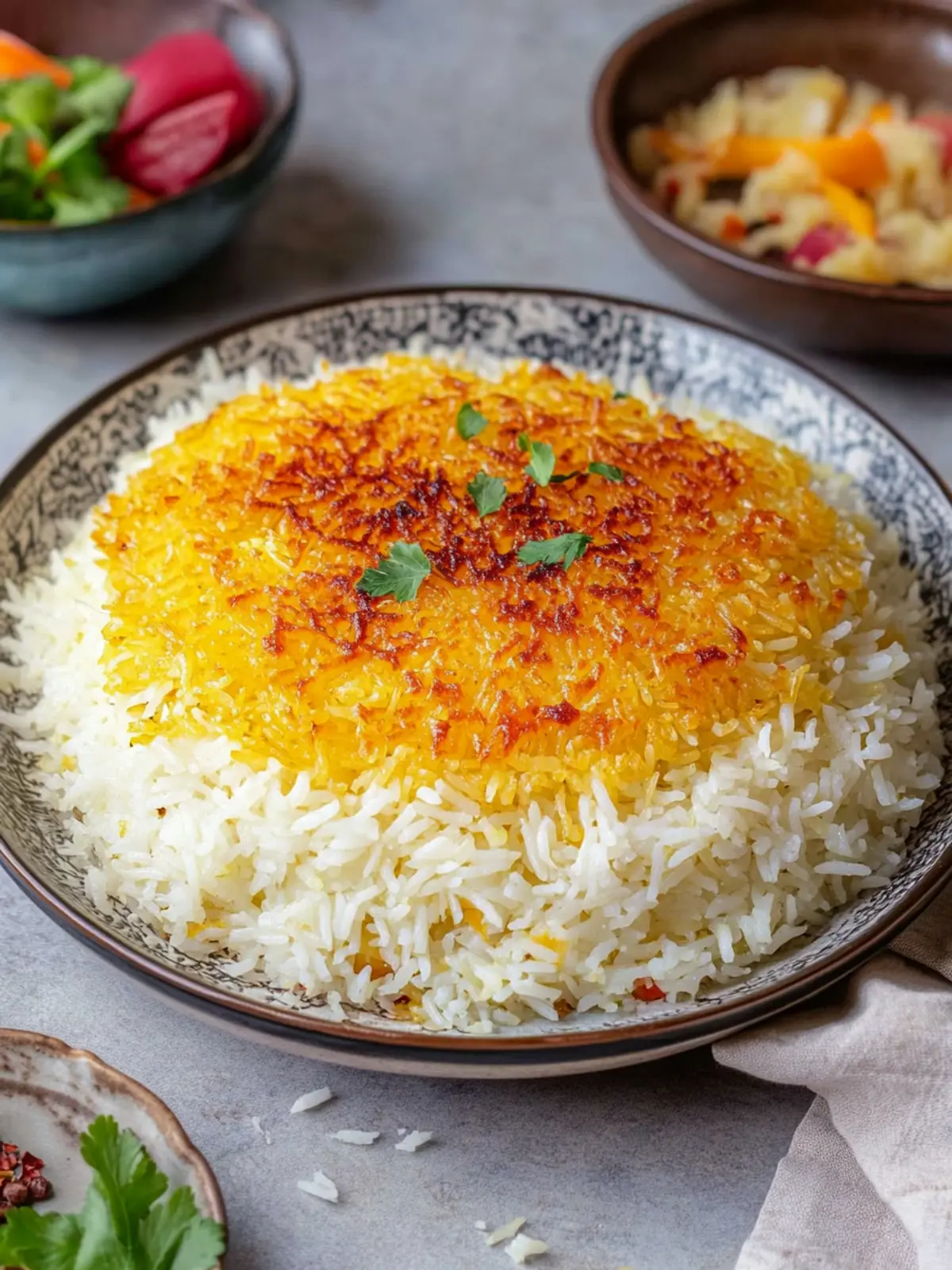
Master the Perfect Tahdig: Crispy Persian Rice Awaits
Ingredients
Equipment
Method
- Rinse the rice several times until the water runs clear. Soak with salt for 20 minutes.
- Boil a large pot of salted water. Cook the soaked rice for 7-8 minutes, then drain and rinse.
- Crush saffron if needed, add it to reserved hot water, and let bloom.
- Heat a skillet, add olive oil, saffron water, and turmeric. Layer the rice and poke holes for steam.
- Cover with a kitchen towel-wrapped lid and cook for 30-35 minutes until crispy.
- Invert the skillet onto a serving plate, revealing the crispy tahdig.