
There’s something utterly enchanting about the way spices dance together in a pot, stirring up memories of warmth and comfort. When I first tasted Sri Lankan Egg Curry, I felt like I’d been transported to a bustling market in Colombo, filled with an array of aromatic delights. This dish is a celebration of soft-boiled eggs enveloped in a rich, spiced coconut sauce, creating a symphony of flavors that entice the senses.
Perfect for those chaotic weeknight dinners or leisurely weekend feasts, this recipe is both quick and easy to whip up, allowing you to impress family and friends without spending hours in the kitchen. What I love most is its versatility—whether you stick with delicious eggs, opt for tofu, or even chickpeas, you can adjust it to suit your palate. Join me as we dive into this comforting coconut delight that will quickly become a favorite in your home!
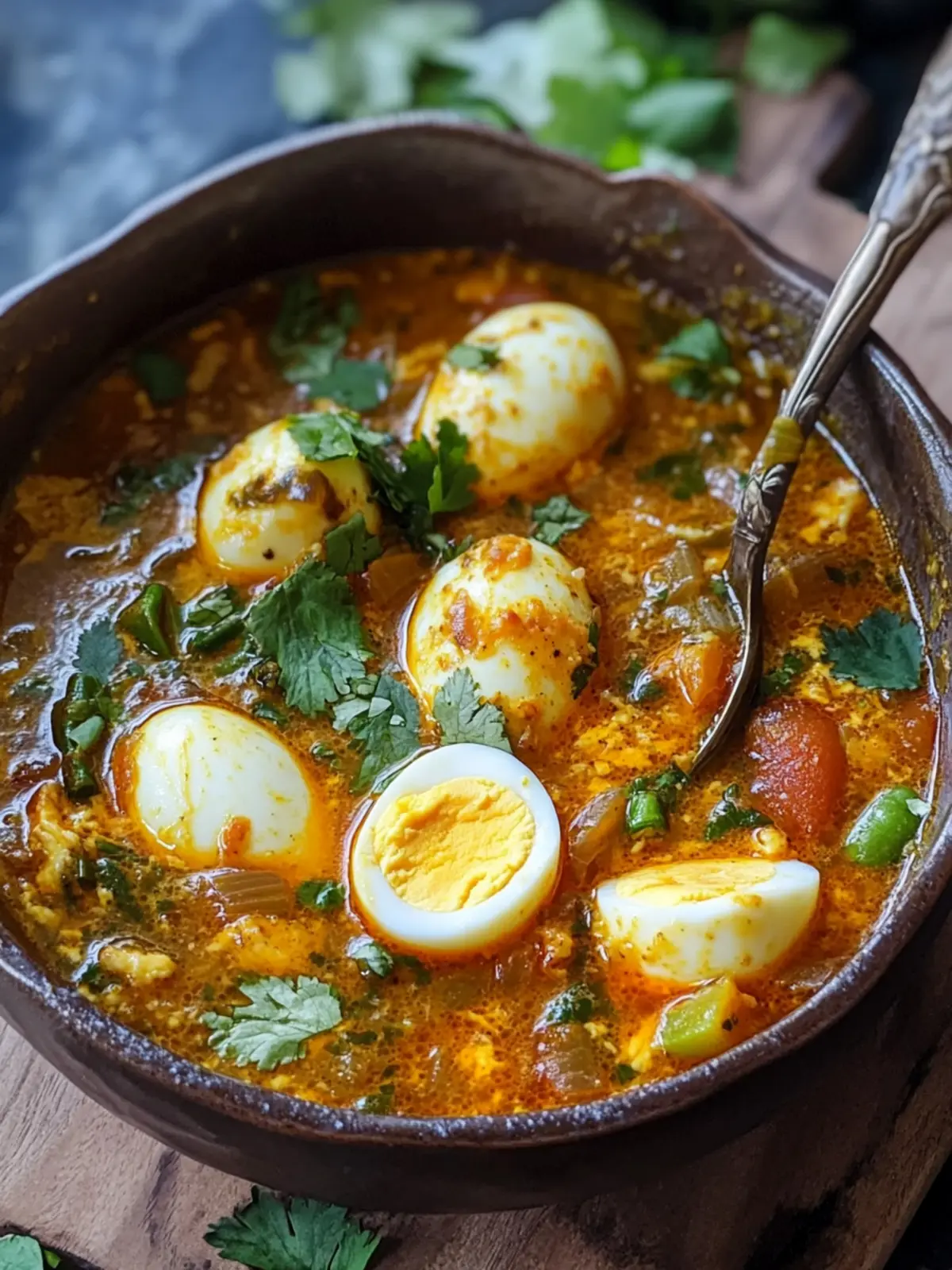
Why is Sri Lankan Egg Curry a must-try?
Flavor-packed and comforting, this Sri Lankan Egg Curry will awaken your taste buds and satisfy your cravings for hearty home-cooked meals. Quick and easy to prepare, it’s designed for busy weeknights yet fancy enough for special gatherings. Versatile ingredients allow for endless adaptations, whether you’re using eggs, tofu, or chickpeas. Plus, it’s gluten-free and has a vegan option, making it a crowd-pleaser for everyone at the table! Don’t miss our tips for cooking perfect eggs and storage options to keep your curry fresh for days!
Sri Lankan Egg Curry Ingredients
Unlock the secrets of this warm, inviting dish with the essential ingredients you’ll need!
For the Curry
• Eggs – Provide protein; hard-boiled works best for texture, but soft-boiled can also be used.
• Coconut oil or ghee – Adds richness and authenticity; substitute with vegetable oil for a vegan twist.
• Cinnamon – Infuses warmth and aroma, setting the flavor foundation.
• Cardamom – Enhances the curry with a sweet and spicy note.
• Curry leaves – Essential for authentic flavor; bay leaves can substitute in a pinch.
• Garlic – Adds savory depth to the curry’s profile.
• Ginger – Provides a zingy freshness to the dish.
• Onions – Base flavor; use yellow or white onions for the best result.
• Tomatoes – Introduces acidity and sweetness; either fresh or canned varieties work.
• Ground coriander – Adds earthy notes to enrich the spice blend.
• Garam masala – A crucial mix for warmth and complexity in flavor.
• Chili powder – Imparts heat; adjust according to your spice tolerance.
• Turmeric powder – Provides vibrant color and mild flavor.
• Coconut milk – Creates a creamy sauce; substitute coconut cream for added richness.
• Fresh cilantro – For garnish, adding brightness and freshness to the dish.
• Chili oil (optional) – Drizzle for a little extra spice to elevate the flavor further.
Enjoy crafting your Sri Lankan Egg Curry with these ingredients, and let the comforting aromas transport you straight to the heart of Sri Lanka!
How to Make Sri Lankan Egg Curry
-
Boil eggs in a pot with water and a splash of vinegar for easier peeling. Cook for about 10-12 minutes until hard-boiled, then place them in cold water.
-
Heat coconut oil or ghee in a large pan over medium heat. Add cinnamon, cardamom, and curry leaves, letting them sizzle for about 30 seconds to infuse the flavors.
-
Sauté garlic and ginger together in the pan, cooking until they soften and release their aromas, approximately 1 minute.
-
Add chopped onions to the mixture, stirring occasionally until they turn translucent, which should take 3-4 minutes.
-
Incorporate chopped tomatoes; cook until they soften and become mushy. Then, add ground spices such as coriander, garam masala, chili powder, and turmeric, sautéing until fragrant, about 2 minutes.
-
Pour in the coconut milk, stirring well. Allow the sauce to come to a gentle simmer for about 5 minutes, letting all the flavors meld beautifully.
-
Gently add the peeled eggs to the simmering curry, letting them warm through for an additional 2-3 minutes.
-
Garnish with freshly chopped cilantro and, if desired, drizzle with chili oil for an extra kick. Serve hot over fluffy steamed rice.
Optional: A squeeze of lime juice enhances the freshness beautifully.
Exact quantities are listed in the recipe card below.
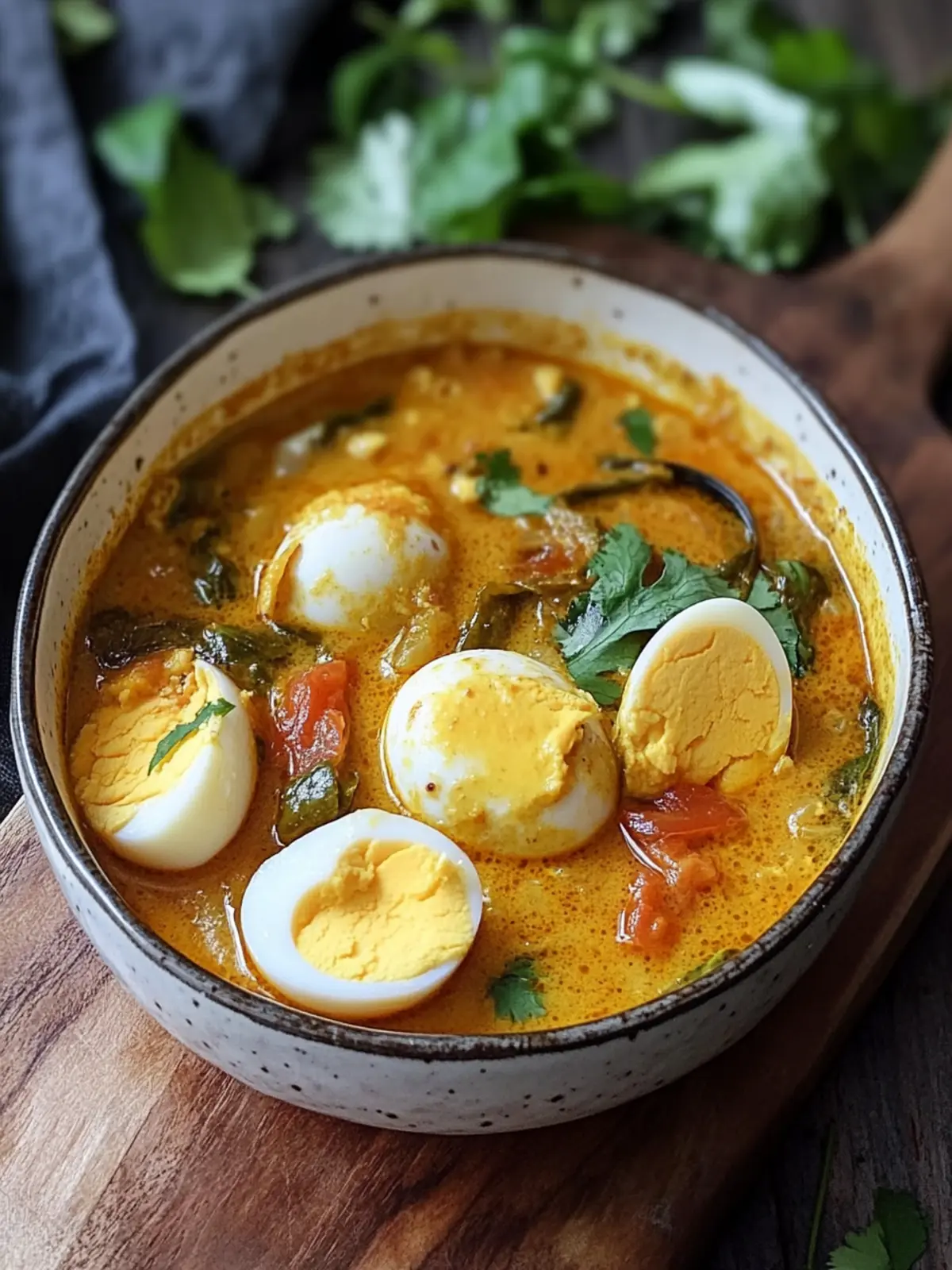
Storage Tips for Sri Lankan Egg Curry
Fridge: Store cooled Sri Lankan Egg Curry in an airtight container for up to 3 days. Make sure it’s completely cooled to maintain texture and flavor.
Freezer: You can freeze the curry for up to 1 month. Transfer it to a freezer-safe container, leaving space for expansion.
Reheating: When ready to enjoy leftovers, reheat on the stove over medium heat. Add a splash of coconut milk or water to restore creaminess if needed.
Thawing: For frozen curry, thaw overnight in the fridge before reheating. This allows the flavors to meld and ensures an evenly heated dish.
Make Ahead Options
Sri Lankan Egg Curry is an excellent choice for efficient meal prep! You can boil and peel the eggs up to 24 hours in advance, storing them submerged in cold water in the refrigerator to prevent browning. The curry sauce can be prepared up to 3 days ahead; simply follow the instructions until adding the eggs, and cool it down before refrigerating. When you’re ready to serve, reheat the sauce on the stove and gently add the boiled eggs, simmering for about 2-3 minutes to warm through. This way, you’ll have a flavorful, comforting dish that tastes just as delicious, all while saving valuable time during busy weeknights!
Sri Lankan Egg Curry Variations
Feel free to play around with this beloved recipe, transforming it into your perfect dish!
- Vegan Option: Replace eggs with firm tofu or chickpeas for a delightful plant-based experience. The spices will still shine through!
- Vegetable Medley: Add diced potatoes, carrots, or peas to the curry for a nutrient-packed twist, adding heartiness and color to the dish.
- Creamier Sauce: Swap regular coconut milk with coconut cream for a thicker, richer consistency that will tantalize your taste buds!
- Heat Boost: Increase the chili powder or add fresh green chilies to crank up the heat level, perfect for those who adore a spicy kick.
- Herb Infusion: Try adding fresh mint or basil along with cilantro for an unexpected herbal brightness that elevates the flavor.
- Lentil Addition: Stir in cooked lentils for extra protein and a rustic texture, making your curry even more satisfying!
- Nuts & Seeds: Toss in some roasted cashews or sunflower seeds for a delightful crunch that contrasts with the creamy sauce.
- Citrus Zest: A dash of lime or lemon juice before serving brightens all the flavors, giving your curry an extra layer of freshness.
Expert Tips for Sri Lankan Egg Curry
• Perfect Eggs: Ensure you boil the eggs with a splash of vinegar; this makes peeling them easier and prevents any unwanted cracks.
• Adjusting Spice: If you’re sensitive to heat, start with less chili powder and gradually add more until it reaches your desired spice level.
• Vegan Swap: For a vegan option, swap out the eggs for firm tofu or chickpeas, which will absorb all those rich flavors beautifully.
• Thickened Sauce: If you prefer a thicker curry, let it simmer longer or mix a bit of cornstarch with water to incorporate towards the end.
• Aromatic Garnish: Always finish with fresh cilantro for that burst of freshness, and don’t forget the optional chili oil if you love an extra kick!
• Storing Leftovers: Store any leftover Sri Lankan Egg Curry in an airtight container; it keeps well in the fridge for up to 3 days and can be frozen for a month.
What to Serve with Sri Lankan Egg Curry?
Creating a well-rounded meal around this comforting curry transforms it into an unforgettable feast.
-
Fluffy Steamed Rice: The perfect vehicle for the rich sauce, absorbing every drop of flavor while providing a light, fluffy contrast.
-
Roti or Paratha: These soft, flaky breads are excellent for scooping up the curry and add a delightful texture to your meal experience.
-
Sautéed Greens: A side of lightly sautéed spinach or kale brings a fresh, vibrant crunch that balances the dish’s creaminess.
-
Fresh Salad: Crisp cucumbers and crunchy carrots tossed with a tangy lime dressing provide a refreshing contrast to the warm spices.
-
Spicy Pickles: A small side of Sri Lankan sambol or any pickled vegetables amplifies the curry’s flavor profile with its tangy heat.
-
Coconut Raita: This cooling yogurt dip offers a creamy counterpoint to the spiced curry, soothing any heat while enhancing the overall enjoyment.
-
Mango Chutney: A spoonful of sweet and tangy chutney pairs beautifully, bringing a burst of flavor that complements the richness of the curry.
-
Lemonade or Ginger Tea: To round out the meal, a cold glass of refreshing lemonade or a warming cup of ginger tea offers delightful refreshment, enhancing the entire dining experience.
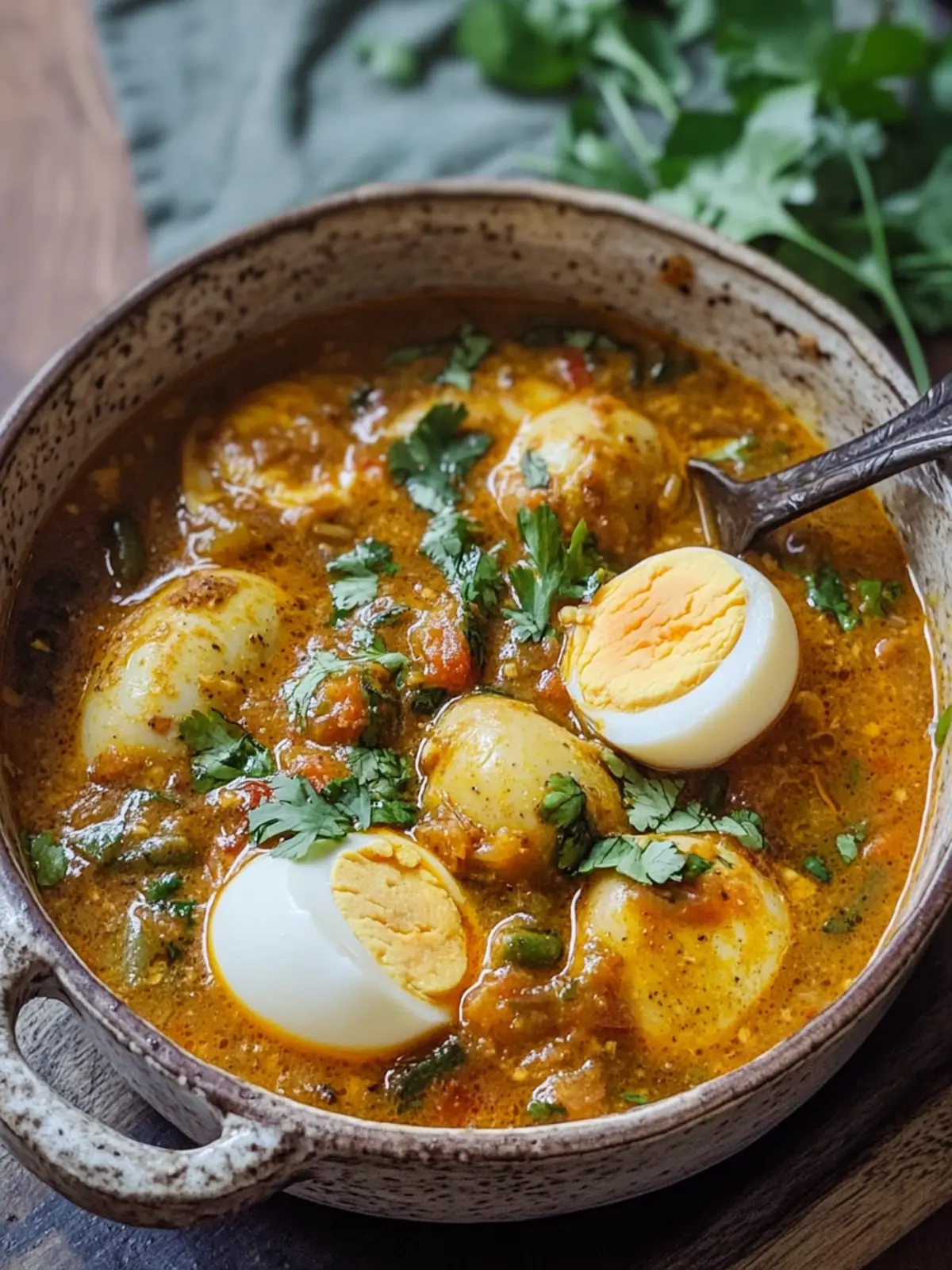
Sri Lankan Egg Curry Recipe FAQs
What type of eggs are best for Sri Lankan Egg Curry?
Firm, hard-boiled eggs work best for this recipe as they maintain their structure and absorb the curry flavors beautifully. Soft-boiled eggs can also be used but might break apart in the curry.
How should I store leftover Sri Lankan Egg Curry?
Store cooled Sri Lankan Egg Curry in an airtight container in the refrigerator for up to 3 days. Ensure it’s completely cooled before sealing to maintain texture. If you need to freeze it, opt for a freezer-safe container, allowing room for expansion as it freezes.
Can I freeze Sri Lankan Egg Curry?
Absolutely! You can freeze Sri Lankan Egg Curry for up to 1 month. Make sure to transfer it to a freezer-safe container and leave some space for the sauce to expand as it freezes. When ready to reheat, thaw overnight in the refrigerator and warm it gently in a pot, adding a splash of coconut milk or water to restore creaminess.
What should I do if my curry is too spicy?
If your Sri Lankan Egg Curry turns out too spicy, don’t worry! You can balance it by adding more coconut milk or a touch of sugar. These additions will help mellow the heat without compromising the flavors of the dish.
Are there any dietary considerations I should be aware of?
Yes, this dish can be made gluten-free and also has a vegan option. To make it vegan, simply substitute the eggs with firm tofu or chickpeas. Always check for any additional allergens with your specific ingredients, especially if cooking for guests.
What can I do if my sauce is too thin?
If your sauce is too thin for your liking, let it simmer longer over low heat to thicken naturally. Alternatively, you can mix a tablespoon of cornstarch with two tablespoons of water and stir it into the curry, cooking until thickened. This should give you a richer and creamier sauce!
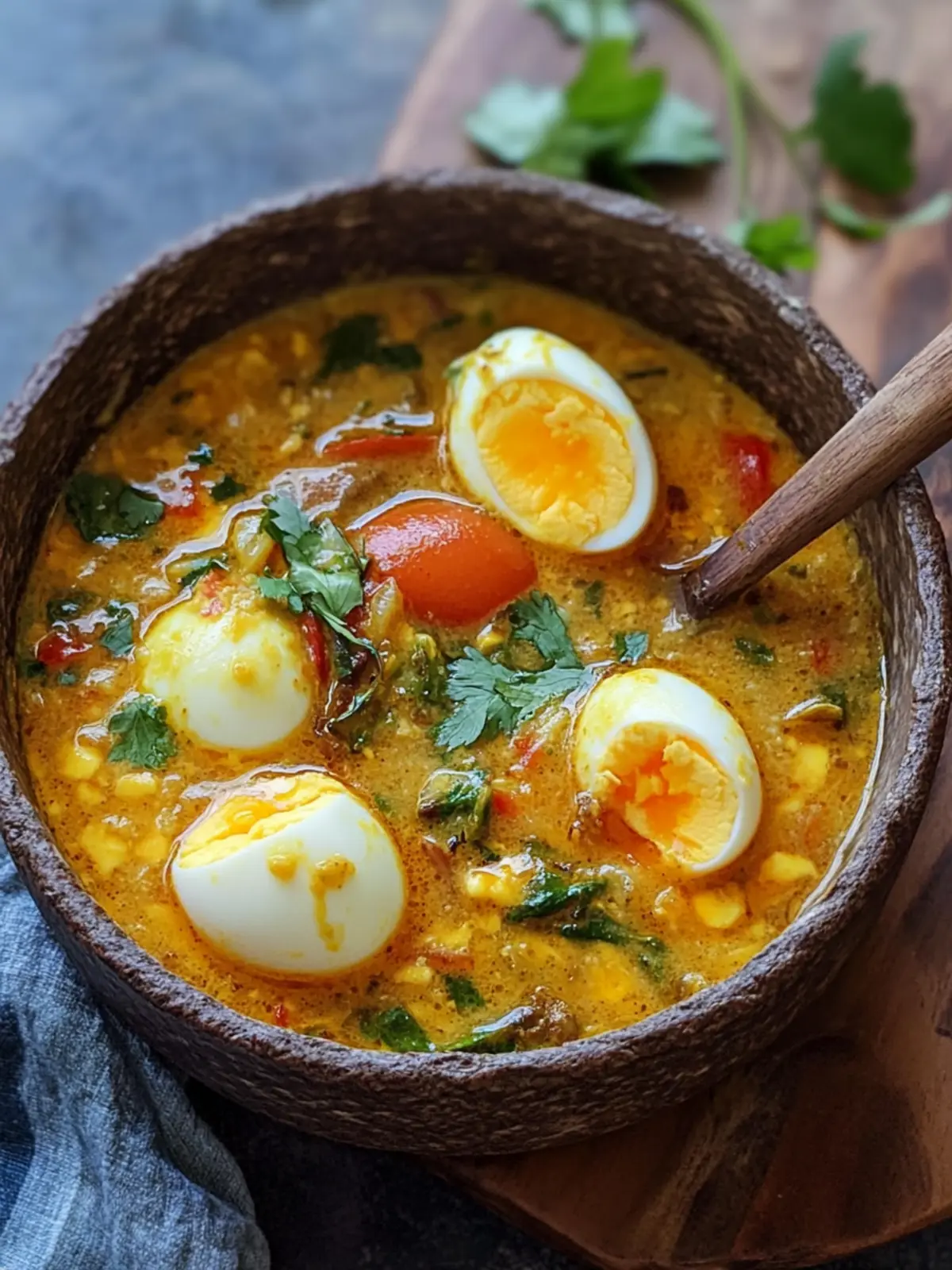
Sri Lankan Egg Curry: A Creamy, Spicy Comfort Food Revelation
Ingredients
Equipment
Method
- Boil eggs in a pot with water and a splash of vinegar for easier peeling. Cook for about 10-12 minutes until hard-boiled, then place them in cold water.
- Heat coconut oil or ghee in a large pan over medium heat. Add cinnamon, cardamom, and curry leaves, letting them sizzle for about 30 seconds to infuse the flavors.
- Sauté garlic and ginger together in the pan, cooking until they soften and release their aromas, approximately 1 minute.
- Add chopped onions to the mixture, stirring occasionally until they turn translucent, which should take 3-4 minutes.
- Incorporate chopped tomatoes; cook until they soften and become mushy. Then, add ground spices such as coriander, garam masala, chili powder, and turmeric, sautéing until fragrant, about 2 minutes.
- Pour in the coconut milk, stirring well. Allow the sauce to come to a gentle simmer for about 5 minutes, letting all the flavors meld beautifully.
- Gently add the peeled eggs to the simmering curry, letting them warm through for an additional 2-3 minutes.
- Garnish with freshly chopped cilantro and, if desired, drizzle with chili oil for an extra kick. Serve hot over fluffy steamed rice.